
The Live Ops Retention Engine

Michael Sorrenti
I help companies design products people can’t stop using | Creative Technologist | Product design & AI Advisory | Builder for Disney, ESPN, Mattel, Marvel & Nickelodeon | Founder, Game Pill
How we make games part of daily life
One major thing I’ve noticed as a game developer, after launching many products and services, is that most people don’t think about how to maintain their users after the initial hype dies down. You cannot guarantee that your player base will stick with you, even if you’re confident and passionate about your game. This is where live operations come in. Many players leave after the natural conclusion of a game. Often times early ad budgets dry up and there are not new players coming into the game and the game dries out.
Why stay when you’ve already defeated the final boss? Why buy skins when the game is already completed? They won’t have a reason to buy them, let alone use them. The retention graph peaks at launch, or spikes again during a sale, but your concurrent player count drops below a thousand and revenue dries up. You built something. You shipped it.
And now it’s quietly bleeding out while you watch the dashboard. The problem with many game launches is that studios simply aren’t prepared to maintain what they just built. They treat the initial launch as the finish line. They ship the game, watch the numbers come in, and hope the game will be enough. That players will stay on its own merit.
That good design and good reviews will do the work for them. But here’s the truth. The race isn’t over. It’s just a new lap, and often early laps. And the studios that succeed long term knew that before they ever hit publish. They planned for it. They built the stamina to maintain it.
I understand that’s easier said than done, especially for smaller developers. Launch alone is brutal. But retention doesn’t have to be a mystery. Here’s the framework we use with our customers to help keep existing players coming back.

What Keeps People In
Before we talk about Live Ops, we need to make the mechanisms clear. Players do not stay because of a single feature, they stay because of the system. Retention is also not additive, it is multiplicative. If one part fails, the whole thing becomes weak. If the game doesn’t feel good to play, frustrating mechanics, unfun game loop, people will leave, no matter what gacha, progression, or event system you add. It won’t save you. The players know very quickly what is worth their time. If you establish a good foundation, progression takes over.
Players need to feel like they’re moving toward something. Levels, unlocks, builds, narrative, whatever form it takes. It must have a clear sense of forward momentum. And more importantly, they need to see what’s next. If the next goal isn’t obvious, momentum dies. Make it feel like it is worthwhile. Then comes rewards. By giving them things in a way that feels good, immediate rewards keep sessions satisfying. These rewards give players something to work toward. And variability, those moments where something unexpected happens, is what keeps it from becoming predictable.
But none of that sticks without habit. The best games don’t just get played, they are revisited over and over again. Daily missions, streaks, time-based systems aren’t just mechanics, they establish a routine. They give players a reason to come back, even if it’s only for a few minutes.
When a game becomes social, it changes completely. Players don’t just log in for the game anymore. They log in because leaving means disconnecting from something bigger. They feel that FOMO when they don’t grind with their guild mates, meet with their friends, etc.
Finally, the game has to keep changing. Even a great experience goes stale. New content, events, updates, surprises can help signal that the game is still alive and worth coming back to, that something might be different today than it was yesterday.

Why Live Ops Matters More Than Ever
This is where Live Ops comes in, because everything we just talked about doesn’t sustain itself. Most games are built like products. You design them, you polish them, you ship them. For a moment, it works, but then they leave. This is not because the game is a bad game, it’s because they feel like they got all they needed from it and chose to move on.
The reality is that players don’t consume games the way they used to. They rotate between experiences. They follow momentum. They come back when something pulls them back. If your game doesn’t give them that reason, something else will. This is why you must invest in live ops. It is not optional anymore. It’s not post-launch support. It’s not a nice-to-have. It’s the system that keeps your game alive. And this is where most teams get caught off guard. They budget for development. They budget for launch. But they don’t budget for what comes after.
They leave no room for ongoing content and no room for iteration. Over time, that turns into something much harder to recover from. You reach a point where bringing people back costs more than keeping them ever would have. At that point, you’re not growing anymore, you’re trying to stop the loss. That’s the point of no return most teams don’t see coming.
Live Ops is what prevents that. It gives you the ability to adjust progression when players stall. introduce content when engagement dips, test, learn, and pivot based on real behavior. Without it, you’re locked into what you shipped, with a game that can’t evolve to become something players actually want. That is the difference between slowly losing, and consistently winning.
The Framework: See, Stay, Sink In
The first phase covers the first three days. Make that first session count. Players need to understand what the game is, feel good about playing it, and experience something genuinely fun as fast as possible. Most games fail here because they focus on getting players through the tutorial instead of making them feel something. Those are not the same thing.
The second phase covers days seven through fourteen. This is where most games lose players. Someone who made it past day one liked what they played, but they haven’t made it a habit yet. Your job in this window is simple: give them a reason to open the game tomorrow, not just today. Progress they can see. Something to come back for.
The third phase is day thirty and beyond. By this point, the players who are still with you have made your game part of their routine. Long-term retention isn’t about how much content you ship. It’s about whether the game feels like a place they belong. That means community, seasonal events, personal goals, and a world that keeps moving even when they log off.
Underneath all three phases is the same idea. Players stay when they feel like their choices matter, when they can see themselves improving, and when the game means something to them personally. Everything we build is designed around those three things.
Monitoring: What we watch and when
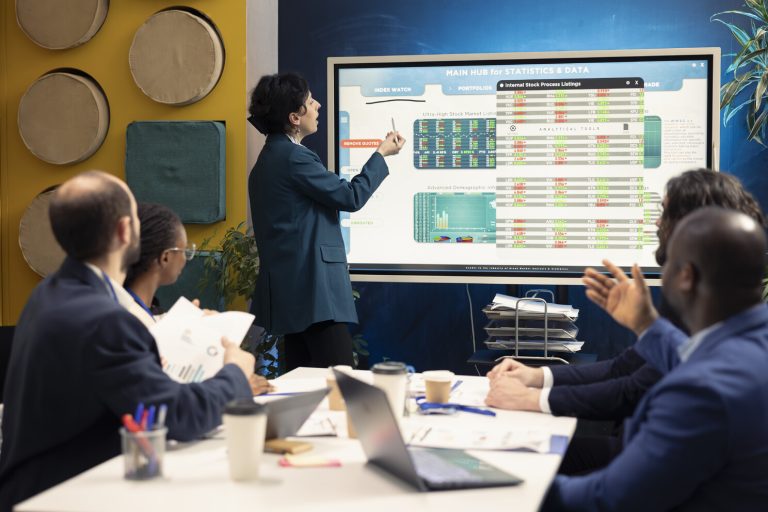
Analytics only matter when you check them at the right time and ask the right questions. We run daily health checks to catch anything that looks off early. Weekly, we look at where players are dropping off or getting stuck. Monthly, we zoom out and adjust our strategy based on where we want to be thirty days from now. Numbers tell you what is happening. They don’t tell you why. So we treat player feedback as just as important as any dashboard. Reviews, community threads, support tickets, in-game surveys. Some of our best live ops decisions came from reading one-star reviews, not from staring at spreadsheets.
Platform matters more than people think. Subscription services are about engagement and satisfaction. Traditional storefronts are about revenue health and review momentum. Same game, different lens.

Updates: Every patch is a behavioral experiment
Not every update does the same job, so we stopped treating them like they do.
Reliability updates fix stability issues, improve load times, and clean up anything that feels rough. They are not exciting, but a frustrating experience is one of the quietest ways to lose a player permanently. Progression and feature updates add new goals and new reasons to come back. This is your core retention engine. If players have nothing left to do, they leave.
Balance and economy updates keep the game in a sweet spot where it feels challenging without being punishing, and rewarding without feeling hollow. Get this wrong and players stop trusting the game, even if they cannot explain exactly why. We treat every update as a hypothesis. Before anything ships we define what we expect to happen and who we expect it to affect. After it ships we measure whether we were right. That turns every update into something you learn from, not just something you release.
Events: Engineering the “must check” moment
Live events work because they create urgency without pressure. Something is happening right now, everyone is part of it, and it won’t be there tomorrow. Short events run for a couple of days and give players something quick and low-commitment to jump into. Weekly events build routine and turn occasional players into regulars.
Seasonal arcs run for weeks and give the game a sense of identity, a feeling that the world is alive and moving even when you’re not in it. The principle behind all three is the same. Align your events with how people actually live. Weekends, holidays, daily routines. When an event feels like a natural part of a player’s week rather than an interruption, participation increases on its own.

Segmentation: Different journeys, Same game
Treating all players as one group is one of the most expensive mistakes you can make. We design around three things: where someone is in their journey, how they play, and why they play. New players need quick wins. Returning players need a smooth re-entry. Lapsed players need a gentle way back, not a wall of everything they missed.
Some players have ten minutes. Others have three hours. Both need to feel like the game was built for them. Some want mastery. Others want competition, community, and social connection. In practice, this means welcome-back missions, optional challenge tracks, and low-pressure events. Players who feel understood stay longer and spend more. It’s that simple.
What this looks like in practice
In one case, a puzzle game had a strong Day 1 performance, but a sharp drop at Day 7. Players finished the first content arc and had nowhere to go. We introduced a light collection system, added weekly events, and adjusted the mid-game difficulty curve. We also reframed the end of the first arc so it pointed forward instead of feeling like a conclusion. Retention improved significantly. The game shifted from a good experience to a weekly habit.
In another case, a premium title launched strong, then slowly declined. The game felt static. We introduced regular quality-of-life updates based on player feedback, timed balance patches around key sales moments, and added themed events. Review sentiment stabilized and improved. Revenue shifted from a steep drop to a healthier long tail.
In a third case, a cross-platform game had completely different player behavior depending on where it was played. On one platform, players wanted depth and progression. On another, they were browsing and wanted something easy to pick up. We built separate live ops strategies for each, while keeping a shared content pipeline.

How we work with Developers & Publishers
Before launch, we review the game for anything that could hurt retention and ensure proper tracking is in place. During soft launch, we move quickly, adjusting onboarding, difficulty, and early goals based on real player behavior. Once the game is live, we maintain a steady rhythm of updates, events, and check-ins, all tied to the metrics that matter. What we’re most proud of isn’t any single campaign. It’s the thinking behind every decision. Every update, every event, every feature is connected to real player behavior and real outcomes. That gives you a repeatable process, not a series of one-off bets. Here’s the truth about retention. It comes down to one question: Why will someone open your game tomorrow?
When you build your answer around how people actually behave, everything gets clearer. Players stay longer. Revenue holds. And your team earns the breathing room to take bigger swings on what comes next.
If you want to see what this looks like for one of your titles, start with a retention review. Look at the first thirty days of player behavior, identify what’s working, what isn’t, and where the biggest opportunities are. From there, you can build something that lasts.
Reply or DM “RETENTION AUDIT” and I’ll run a free 10-day player behavior analysis on your top title—spotting drop-offs, quick wins, and your custom Live Ops roadmap. No strings, just results. GAME PILL Michael Sorrenti

- “App Store & Apple Arcade Developer Guidelines.” Apple, https://developer.apple.com/
- “Global Games Market Report.” Newzoo, 2024, https://newzoo.com/resources
- “Mobile Gaming Benchmarks Reports.” GameAnalytics, 2023–2025, https://gameanalytics.com/resources/
- “State of Mobile Gaming.” App Annie (data.ai), 2024, https://www.data.ai/en/insights/
- “Steamworks Documentation & Developer Talks.” Valve Corporation, https://partner.steamgames.com/doc/home
- “Unity Gaming Report.” Unity Technologies, 2024, https://unity.com/resources
- Eyal, Nir. Hooked: How to Build Habit-Forming Products. Portfolio, 2014.
- Schell, Jesse. The Art of Game Design: A Book of Lenses. 3rd ed., CRC Press, 2019.
- Deci, Edward L., and Richard M. Ryan. “Self-Determination Theory.” 1985–2000.
- “Live Ops & Monetization Analysis.” Deconstructor of Fun, https://www.deconstructoroffun.com/
#GameDevelopment #LiveOps #GameDesign #PlayerRetention #MobileGaming #GamingIndustry #GameAnalytics #ProductStrategy #UserRetention #LTV #GameMonetization #BehavioralDesign #UXDesign #DigitalProducts #GrowthStrategy #ProductManagement #Engagement #GameStudios #IndieDev #Steam #AppStore #AppleArcade #NetflixGames #F2P #GameMarketing