How Interactive Turns Trade Show Visitors Into Happy Customers

Michael Sorrenti
I help companies design products people can’t stop using | Creative Technologist | Product design & AI Advisory | Builder for Disney, ESPN, Mattel, Marvel & Nickelodeon | Founder, Game Pill
Trade shows are expensive for most companies. A small 10×10 booth can easily cost five figures or more once you add up the space rental, the display materials, shipping costs, travel for staff, and hotel rooms. That is a huge investment for just two or three days. But here is the painful truth. Most of that money goes straight to waste because people simply walk by without stopping or those who do stop are not seen because there is not enough booth staff there to help at peak moments in the day. At a major show like CES in Las Vegas, the average attendee looks at a booth for less than 3 seconds. That is barely enough time to blink.
These attendees are distracted by their phones, tired from walking, and completely overwhelmed by the noise and flashing lights around them. They have already seen hundreds of booths by lunchtime. Their brains are on autopilot.
The hard truth is that attention has become the new currency of events. And right now, most booths are completely invisible. They blend into the background like wallpaper. If you cannot capture attention in the first few seconds, nothing else matters. Not your product. Not your team. Not your special discount. None of it.

Why Most Booths Get Ignored
Attendees develop a natural shield against sales pitches over time. They have been burned before by pushy salespeople who would not take no for an answer. So they learn to avoid eye contact with strangers at all costs. They look down at their phone. They look sideways. They look anywhere except at the person standing behind the booth table.
In fact, many attendees will literally walk in a wider arc around a booth just to skip a conversation. They would rather add 20 extra steps than feel trapped by someone asking, “What brings you to the show today?” That question makes them feel like a target, not a guest.
A passive booth makes this problem much worse. Passive booths rely only on banners, brochures, a TV screen playing the same looped video, and tired salespeople in matching shirts. None of those things break through the attendee shield. For example, Salesforce once ran a standard booth with just product posters and a single TV screen at a cloud computing conference. They tracked how many people stopped. The result was shocking. Over 80 percent of attendees walked right past without even slowing down.
The deeper insight is this. If people actively ignore friendly humans who smile and say hello, then they will definitely ignore boring cardboard signs and plastic brochure racks. Humans are the most engaging thing we have. And even humans are failing. That is how tough the trade show floor has become.

Why Interactive Experiences Work
Interactive experiences work because they trigger deep human instincts that are hard to resist. These instincts include curiosity, competition, social proof, emotion, and the simple desire to participate. You do not need to be a psychologist to understand it. Just think about your own behavior.
When you see a crowd of people laughing and cheering at a booth, you naturally want to know what is happening. That is social proof. When you see a leaderboard with high scores, you think, “I can beat that.” That is competition. When a game gives you a small win like a free snack or a fun sticker, you feel good. That is emotion.
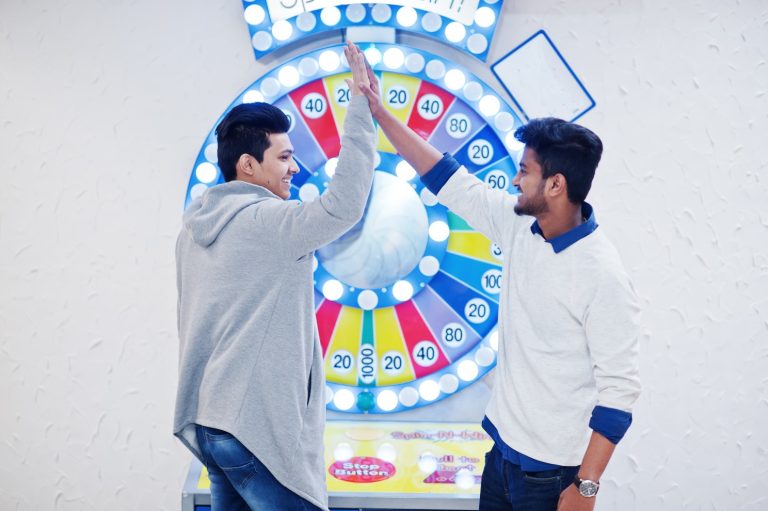
For example, at the SXSW conference in Austin, the streaming service Peacock set up a “Spin the Wheel” game. Attendees answered easy trivia questions about popular shows like “The Office” and “Saturday Night Live.” Every correct answer earned a spin of a large colorful wheel. Winners received free popcorn, branded t-shirts, or even a month of free streaming. The result was amazing. The Peacock booth had a waiting line for 4 hours straight. People were happy to wait 20 minutes just for a chance to spin a wheel. They posted photos on Instagram. They told their friends. They stayed at the booth much longer than they planned.
Interactive booths feel like play, not work. That is the secret. When something feels like a game, your guard drops. You stop worrying about being sold to. You just want to have fun. Passive booths feel like a trap. You see a table with brochures and you think, “They are going to ask for my email.” So you keep walking. Interactive booths feel like a game, so you walk toward them instead of away.
The Metric That Matters Is Dwell Time
Dwell time is a simple but powerful metric. It means how long a person stays at your booth from the moment they stop until the moment they leave. Most trade show exhibitors never even measure this number. That is a huge mistake. Because dwell time predicts almost everything else that matters.
At a normal trade show booth with just banners and brochures, the average dwell time is only 10 to 30 seconds. That is barely enough time to say hello, shake a hand, and exchange a business card. You certainly cannot have a real conversation about a customer’s problems in 20 seconds. You cannot build trust. You cannot explain a complex product.
But interactive booths flip that number completely. When people are playing a game, answering a quiz, or competing on a leaderboard, they lose track of time. They want to finish the level. They want to see their score. They want to beat their friend.
For example, the software company HubSpot built a tool called “Website Grader” at their annual INBOUND event. Visitors could enter their own company website URL into a tablet. The tool then generated a live score from 0 to 100 based on site speed, mobile friendliness, and SEO. Visitors were fascinated. They wanted to know why they got a 62 instead of an 85. They called over their coworkers to see. They asked the HubSpot staff how to improve. The average dwell time at that HubSpot booth jumped to over 3 minutes.
Some people stayed for 5 or 6 minutes. That is a 10x improvement over the industry average. And here is what happens when dwell time goes up. You have more time for real conversations. You have more time to ask questions and listen. You have more time to build a connection. And when you build a connection, the chance of a future sale goes way up. Dwell time is truly the bridge between attention and revenue.

Interactive Experiences Enable Seamless Lead Capture
Nobody likes filling out a long form on a small tablet keyboard. It feels like homework. It feels like a trap. You know that as soon as you hit submit, your inbox will fill up with sales emails you never asked for. So people refuse to do it. They make up fake email addresses. Or they just walk away.
This is a huge problem for exhibitors. You need the lead to justify the cost of the show. But the very act of asking for the lead drives people away. The solution is to capture information through the interactive experience itself, not as a separate step.
For example, car manufacturer BMW used a virtual reality racing game at major auto shows in Detroit and Los Angeles. Attendees sat in a real BMW seat, put on a VR headset, and raced a sports car around a digital track. The game recorded their lap time on a giant leaderboard. To get on the leaderboard, players had to scan a QR code that automatically entered their name and email address into BMW’s system.
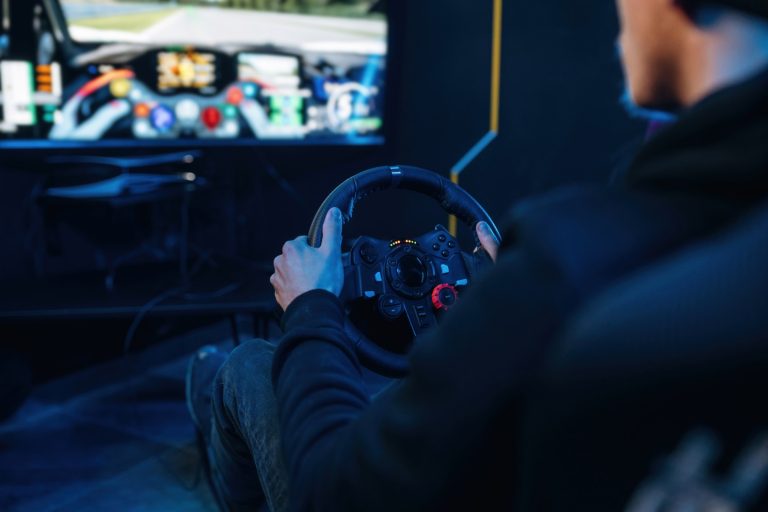
The results were incredible. BMW collected over 10,000 qualified leads in a single weekend. And here is the key. Not one of those 10,000 people felt like they were filling out a form. They were just trying to get on the leaderboard. They were happy to trade their email for a chance to see their name in the top 10.
Another great example comes from the food industry. At the Sweets & Snacks Expo, the candy brand Twizzlers set up a “Pull and Peel” speed challenge. Visitors had to peel apart a Twizzler Pull and Peel rope as fast as possible. A timer recorded their speed. To enter the contest and see the official leaderboard, participants scanned a badge or typed their email. Twizzlers walked away with thousands of leads and a line that never ended.
People give information to participate or to be part of something bigger. They do not give it because you asked nicely.
The Real Advantage Is Actionable Data
A stack of business cards is not real data. It is just a list of names and email addresses. That stack tells you nothing about what each person actually wants or needs. Did the person from Acme Corp want a demo? Were they just looking for a free pen? Did they have budget authority or were they an intern collecting swag? You have no idea.
Interactive tools solve this problem completely. They capture not just who someone is, but what they care about, how engaged they were, and how likely they are to buy. That is the difference between a name and a real lead.
For example, the software company PTC makes industrial software for factories. At a manufacturing trade show, they did not just hand out brochures. Instead, they built a digital quiz on several large touchscreens. The quiz asked one simple question: “What is your biggest manufacturing challenge today?” Visitors tapped answers like “cost reduction,” “improving speed,” “worker safety,” or “quality control.”
That single question changed everything. After the show, PTC sorted every single lead by their answer. They called the “speed” leads first and offered a specific solution for faster production. They sent the “quality control” leads a different white paper. They ignored nobody, but they prioritized based on actual interest. This turned random contacts into ranked leads that salespeople actually wanted to call.
Better data leads to better follow ups. Better follow ups lead to more meetings. More meetings lead to more sales. And more sales lead to measurable return on investment. That is how you justify a $20,000 booth. Not with a stack of business cards that sit in a drawer for six months. But with a spreadsheet that shows exactly who wants what and when to call them

The AI Opportunity Is Scaling the Experience
One human salesperson can only talk to one visitor at a time. That is just a fact. Even the best conversationalist in the world cannot be in two places at once. So when your booth gets crowded, you have a problem. People get ignored. They get impatient. They leave.
This is where AI offers a real opportunity. AI can engage many visitors at the same time. It never gets tired. It never needs a bathroom break. It never forgets to ask a key question. And it can work alongside your human team instead of replacing them.
For example, the event tech company ZoomInfo tested an AI chat assistant at a large B2B marketing conference. The AI was built into a freestanding tablet on a small podium. Visitors could walk up and answer simple questions like “Are you in sales or marketing?” and “How many employees does your company have?” The AI then pointed them to the right product video or case study. But here is the smart part. If a visitor gave answers that matched ZoomInfo’s ideal customer profile, the AI sent a quiet alert to a human salesperson’s smartwatch. That salesperson would then walk over and say, “I see you are interested in enterprise sales tools. Can I show you a quick demo?” The AI handled the low value visitors. The humans handled the high value leads. This doubled the number of quality conversations per hour.
Another example comes from the healthcare industry. At a large medical device conference, the company Medtronic used an AI powered symptom checker at their booth. Visitors described a patient problem, and the AI suggested which Medtronic device might help. Most visitors were just curious. But a few were real surgeons with real purchasing power. The AI identified those surgeons by their answers and immediately alerted a sales rep. AI can qualify people in real time. It can guide experiences. It can automate follow up emails. The key is remembering that AI multiplies your booth power. It does not replace your people.

The Pushback: When AI Can Hurt You
Here is the hard truth that many technology vendors do not want to admit. People already ignore humans at booths. So a screen with a robotic voice and a fake friendly avatar is even easier to ignore. In fact, many attendees will actively avoid an AI booth because they assume it will be a waste of time.
There is also growing skepticism about AI in general. After a year of headlines about fake content, stolen data, and creepy surveillance, many people do not trust AI. They worry that a booth using AI is just harvesting their personal information to sell to someone else. They worry that the AI will not actually answer their question. They worry that it will be awkward and frustrating.
For example, at a marketing technology show in New York, one company decided to use a lifeless AI avatar on a giant 80 inch screen. The avatar had a cartoon face and a computer generated voice. It asked visitors, “How can I help you today?” But when a visitor asked a slightly unexpected question like “What is your pricing?” or “Do you integrate with Salesforce?” the avatar could not answer. It just repeated, “I am sorry, I did not understand that question.” Within two hours, visitors stopped approaching the screen. They stood 10 feet away and pointed. They took videos to mock it on social media.
The company misplaced budget on that AI setup, and they got zero qualified leads from it. The experience felt fake, generic, and robotic. People disengaged immediately. Skepticism is real, and it is growing. If your AI feels even a little bit off, attendees will walk right past. Pairing with a human for new technologies is a good rule to follow. It is okay to be innovative but you must temper with a backup plan.

The Right Approach Is Experience First, AI Second
AI does not create engagement by itself. That is a myth sold by software vendors. AI can only amplify engagement that already exists. If your booth is boring, adding AI will just make it boring faster and at a higher volume. If your booth is fun, AI can make it fun for more people at the same time.
The best approach is to lead with something fun, useful, or surprising. Then make the AI invisible in the background. The attendee should not feel like they are interacting with a robot. They should feel like they are playing a game, learning something interesting, or getting a cool photo. The AI just makes that experience smoother and smarter.
For example, the sports brand Red Bull built a free photo booth at a college event. Fans could stand in front of a green screen and pose with a fake championship trophy. The booth took three photos in quick succession. But behind the scenes, AI automatically cropped out the green screen, added a colorful stadium background, applied a professional filter, and immediately emailed the finished photo to the fan. The whole process took less than 10 seconds.
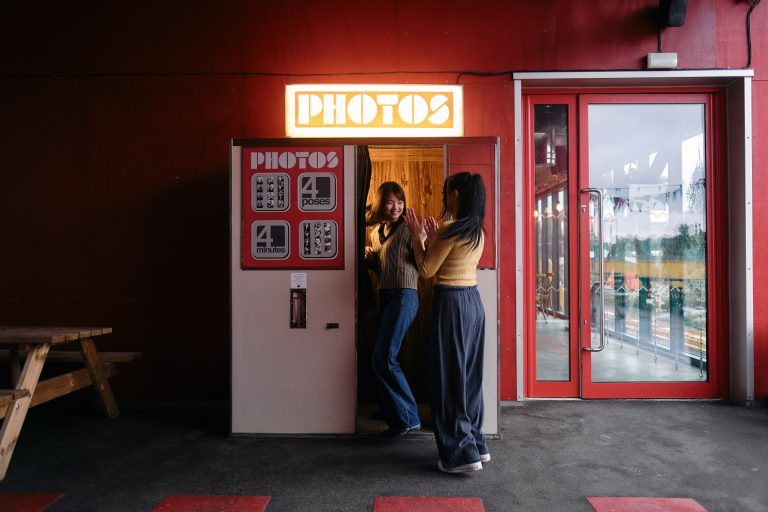
The fan got a fun keepsake to post on Instagram. Red Bull got a verified email address from a real fan who was happy to receive it. And here is the key. The fan never once thought about the AI. They just thought, “Wow, that was fast and easy.” The AI was completely invisible.
So here is the winning combination. Use interactive games and challenges to grab attention. Use human staff to build trust and answer hard questions. Use AI to handle scale and data in the background. Each piece has a job. Even working in this space, I am skeptical of how AI is being used at events. Too often, it tries to replace the experience instead of supporting it. That is backwards. Experience first. AI second. Always.

From Booth Traffic to Pipeline
You do not need a giant budget or a celebrity spokesperson to win at trade shows. You just need to stop being passive. The old way of setting up a table, laying out some brochures, and waiting for people to approach you is dead. It never really worked well, but now it works even less.
Interactive experiences change the game. They capture attention in the first 3 seconds. They keep people engaged for minutes instead of seconds. They convert participation into leads without any of the awkwardness of a sales pitch. And they generate real data about what each customer actually wants.
AI can enhance this whole system, but only when used correctly. Do not lead with AI. Lead with fun. Lead with curiosity. Lead with a game or a quiz or a photo opportunity. Then let AI quietly work in the background to capture data, qualify leads, and automate follow ups.
Remember that interactive is not just entertainment. It is not a gimmick. It is a legitimate lead engine that fills your sales pipeline. And AI is not the main attraction. It is a multiplier that makes your best ideas work for more people at the same time.
So before your next trade show, ask yourself one question. Is your booth passive or interactive? If the answer is passive, do not be surprised when people walk right by. But if you are ready to try something different, the results can be amazing. More attention. More dwell time. More leads. More sales. That is the power of interactive experiences and smart AI working together.

Helping Teams Create Products That Actually Stick
Michael Sorrenti and his team at GAME PILL help companies turn ideas into products people can’t stop using.
With 26+ years of experience creating games, AI experiences, and digital platforms for global brands like Disney, Marvel, and Nickelodeon, our team helps companies design and launch interactive products that drive engagement, revenue, and growth. From AI strategy and product design to market-ready execution, we turn complexity into clear, actionable results.
If you’re planning a trade show booth, pop-up activation, or brand experience and want interactive ideas that stop traffic and generate real leads, reach out—we’ll happily brainstorm concepts tailored to your space, audience, and goals.
Sources:
1. Center for Exhibition Industry Research. “How Exhibitors Evaluate Outcomes.” CEIR, 2024.
https://ceir.iaee.com/2024/10/07/how-exhibitors-evaluate-outcomes/
2. Drapeau, Nancy. “Maximizing Attendee and Exhibitor Engagement on the Exhibition Floor.” Trade Show Executive, 2025.
3. Monte, Kathy. “How to Maximize Attendee and Exhibitor Engagement on the Show Floor.” Trade Show Executive, 2024. https://tradeshowexecutive.com/how-to-maximize-attendee-and-exhibitor-engagement-on-the-show-floor-ceir-offers-tactics/
4. Cvent. “47 Trade Show Statistics Shaping 2025 and Beyond.” Cvent Blog, 2025.
https://www.cvent.com/en/blog/events/trade-show-statistics
5. Trade Show News Network (TSNN). “16 Powerful Stats on the Value of Trade Shows.” TSNN, 2024.
https://www.tsnn.com/trade-show-marketing/16-powerful-stats-on-the-value-of-trade-shows
6. Wave Connect. “Trade Show Statistics 2026: Industry Data, Trends & ROI Insights.” Wave Connect, 2025.
https://wavecnct.com/blogs/tradeshow-statistics
7. ZipDo. “Trade Show Statistics 2026 Report.” ZipDo, 2026.
https://zipdo.co/trade-show-statistics/
8. Wimberly, Rachel. “CEIR Report: How Do Exhibitors Spend Their Marketing Dollars?” TSNN, 2015.
https://www.tsnn.com/exhibitors/ceir-report-how-do-exhibitors-spend-their-marketing-dollars-
9. Anderson, Hil. “CEIR Report Stresses Exhibitors’ Need for Audience Data.” Trade Show Executive, 2013.
https://tradeshowexecutive.com/ceir-report-stresses-exhibitors-need-for-audience-data/
10. Center for Exhibition Industry Research. “CEIR Index Results Showing Continued Improvement for Industry Performance.” Trade Show Executive, 2024.
#TradeShows #EventMarketing #ExperientialMarketing #LeadGeneration #B2BMarketing #MarketingStrategy #CustomerExperience #AIinMarketing #InteractiveMarketing #EventTech #SalesEnablement #GrowthMarketing #DemandGeneration #MarketingInnovation #UserEngagement #DigitalExperience #AI #StartupGrowth #BusinessGrowth #MarketingTips
- Jack Morton Worldwide
- Sparks
- George P. Johnson UK
- Freeman Company
- GES – Global Experience Specialists
- MC2
- Derse
- ASTOUND Group p
- Pico Group
- Momentum Worldwide
- BRC Imagination Arts
- George Little Management
- Czarnowski Collective
- Exhibitgroup Giltspur
- Nth Degree
- Skyline Exhibits
- The Taylor Group
- Impact XM
- Informa Exhibitions – Canada
- Octagon