How Gamification Makes Toys More Fun

Michael Sorrenti
I help companies design products people can’t stop using | Creative Technologist | Product design & AI Advisory | Builder for Disney, ESPN, Mattel, Marvel & Nickelodeon | Founder, Game Pill
Toys don’t need to become video games. They just need to borrow the mechanics that make games work: goals, feedback, progression, and replayability.
The toy industry faces tough competition. Screens, apps, and digital platforms like Roblox and YouTube capture children’s attention for hours. These digital experiences respond instantly to every tap. They reward players constantly with points, levels, and new items. Often a static toy struggles to compete. How do you take a concept that was mastered on screen, and incorporate those same techniques in physical games?
I have a unique take, I build games and invent toys as a hobby. I want to see both industries success in their own way!
In my more than 25 years of building games, interactive products, and engagement systems for brands like Disney, Marvel, and Nickelodeon, I have learned one lesson that works everywhere: people come back to things that react to their actions, adapt to how they play, and give them the feeling of progress over time. Gamification offers a way for physical toys to create repeat play and long-term engagement.
The goal is not to turn toys into video games. Instead, gamification makes play more structured, goal-driven, and habit-forming. A child who builds one LEGO set might stop there. A child who earns badges for completing building challenges and unlocks new missions will want to come back tomorrow to do it all over again.
What Gamification Really Means (And What It Is Not)
Gamification means using game mechanics to influence behavior and increase engagement. The core purpose is to boost motivation, encourage repeat interaction, and build emotional attachment. This is not the same as making a toy into a game however. Play is freeform and unstructured. Games have rules, goals, and usually a way to win or lose. Gamification injects game structure into non-game experiences.
A physical toy that tracks how many times a child has played with it is using gamification. A toy that unlocks a new sound or light pattern after ten missions is using gamification. The toy remains physical. But the experience becomes more like a game, thus still leaving room for a child’s imagination.
The Core Gamification Mechanisms
The real power of gamification comes alive when these simple principles work together. Instead of feeling like a static toy sitting on a shelf, the play experience starts to react, adapt, and pull the child back again and again.
Progression systems create that satisfying feeling of “I am getting better.” A child starts with a basic LEGO Technic build that rolls easily across the floor. Before long, they are unlocking more complex stages with gears that actually spin, motors that hum, and eventually full robotics. The same magic happens with Hot Wheels Track Builder, where simple loops quickly evolve into multi-level stunts and daring jumps. Each new stage whispers the same message: you are improving.
Rewards and reinforcement become far more addictive when they are unpredictable. That rush of opening a Pokemon booster pack, cracking open a Kinder Surprise egg, or pulling a mystery minifigure from a LEGO blind bag never gets old because you never know exactly what you will get. Even classics like Tamagotchi understood this. Nurture your little creature with enough care and it suddenly rewards you with new abilities or affectionate reactions that make you want to keep coming back.
Goals and missions turn aimless play into something with real purpose. Instead of just messing around, a child opens a National Geographic Science Lab kit and follows a clear quest to discover hidden crystals or complete an experiment. Treasure X turns every unboxing into a treasure-hunting adventure, while NERF Mission Sets transform a simple foam-dart battle into a structured operation complete with objectives to complete.
Challenge and difficulty scaling keeps the experience in that perfect flow zone, never too easy and never too frustrating. A Rubiks original brand Cube naturally grows harder the better you get. Osmo adapts on the fly to a child’s skill level. Even something as simple as a marble run becomes endlessly replayable when you add a new rule like “make it taller than last time” or “get the marble all the way across without falling.”
Feedback systems give children that instant, joyful reaction their brains crave. Press the right button on a LeapFrog or VTech activity center and lights flash, sounds play, and the toy cheers them on immediately. Snap Circuits deliver the same thrill. Connect the pieces correctly and LEDs light up or tiny motors start spinning, giving crystal-clear proof that “you did it right.”
Social mechanics bring cooperation, competition, and trading into the mix. Pokemon shines here. Kids trade cards, battle with their decks, and form real friendships around their collections. LEGO City Missions encourage siblings or friends to team up on shared adventures, while NERF team battles reward coordination and strategy as everyone works together to win.
Scarcity and exclusivity create a sense of urgency and excitement. Limited-edition Funko Pop figures, rare Hot Wheels Treasure Hunt cars, and special holiday Squishmallows suddenly feel worth hunting for because they will not be around forever.
Collection mechanics tap straight into that deep human desire to “catch them all.” Pokemon, Shopkins, and LEGO minifigure blind bags all use simple checklists and display cases that make kids proudly show off how close they are to completing their set.
Customization and identity help children build emotional ownership. At Build-A-Bear Workshop, kids do not just get a stuffed animal. They create their own unique friend. American Girl dolls let children choose outfits, accessories, and even matching books that reflect their own stories and personalities. Barbie Fashionista dolls and LEGO DOTS let them express their personality through clothes, colors, and custom designs that feel completely theirs.
Narrative and world building give all these mechanics deeper meaning. Transformers, Playmobil, and LEGO Ninjago do not feel like random toys. They exist inside rich, evolving stories and worlds that children love to step into and expand.
Surprise and mystery multiply engagement like nothing else. LOL Surprise and Hatchimals hide layers of discovery inside every package, while Kinder Surprise built an entire empire on the simple joy of not knowing what is waiting inside.
Time-based loops finally turn one-time play into daily habits. Tamagotchi, Digimon virtual pets, and even accessories like Pokemon Go Plus or VTech Smartwatches reward kids for showing up regularly. Daily streaks, timed missions, and small rewards make children want to check in again tomorrow.
When these mechanisms combine, something powerful happens. The physical toy stops feeling static and starts behaving more like the best digital experiences: responsive, rewarding, and full of progress, while still leaving plenty of room for imagination and real-world play.
Examples of How Gamification Is Being Used in Toys Today
LOL Surprise and Pokémon cards are game-like because they turn play into a system of chance, collection, and mastery that mirrors the structure of a video game. Each LOL Surprise ball or Pokémon booster pack acts like a “loot box.” The child doesn’t know what’s inside until they open it, creating suspense and the thrill of discovery. That uncertainty is the same mechanic used in games where players unlock random rewards or rare items. Collecting becomes the progression system. Children build sets, chase rare dolls or holographic cards, and measure success by how complete or exclusive their collection is.
Pokémon adds a strategic layer. Once enough cards are gathered, players can construct decks and battle, introducing tactics, resource management, and skill growth. Finally, trading brings in the social dimension. Kids negotiate swaps, compare collections, and form communities around shared goals, much like multiplayer games where cooperation and competition drive engagement. Together, the collecting, surprise, strategy, and social exchange make these toys not just playthings but physical versions of a live, evolving game world.
But these are not the only ways it can be incorporated.
Trading ecosystems create social play around collection drives. Magic The Gathering, created by Richard Garfield and published by Wizards of the Coast in 1993, started the modern trading card game genre. Players buy booster packs, build decks, and trade cards with each other. A rare card can be worth hundreds of dollars. The social aspect of trading and playing against friends creates repeat engagement that has lasted more than thirty years.
Mission based toy lines give children clear objectives. Nerf, owned by Hasbro, sells target sets with score tracking. A child shoots foam darts at a target that lights up and displays points. The child tries to beat their high score. LEGO adventure sets come with mission booklets. A LEGO City police set might include a list of crimes to solve. The child builds the vehicles and then plays through the missions.
Toys that unlock with real world actions create habit loops. LeapFrog started selling interactive step counters for children in the early 2010s. A child wears a small device that tracks their steps. Reaching a step goal unlocks a new game or reward on a companion device. Motion triggered toys also work. A plush pet that responds to being petted or picked up gives immediate feedback. The child learns that caring for the toy produces positive responses.
Board games have become live operations with expansion packs and seasonal releases. The game Heroscape, originally published by Hasbro, used terrain tiles and plastic figures. The base game came with one set of characters. Expansion packs added new armies, new terrain, and new scenarios. A child could collect and combine multiple sets to create an endless variety of battlefields.
While these are some examples, don’t think that these are the only ways you can incorporate gamification.
Toys Of The Past & Ideas To Uplift Them
As a child, I loved my toys and often imagined they could do things that simply weren’t possible at the time, talk back, remember my name, or change how they played as I grew older. Today, with modern sensors, connectivity, and adaptive software, those dreams are within reach. Here are some ideas for toys that would be amazing with an added gamification layer.
Imagine a modern-day Tickle Me Elmo that can adapt as a child grows. You can talk to it, and over time it begins introducing different games and activities. It even remembers the child’s name, creating a sense of companionship that evolves with age.
Another example could be turning a simple sport item like a frisbee into a connected experience by introducing a training portal where kids can learn new throws and earn badges. They could join a local frisbee club to interact with other children nearby who want to play, all under parental supervision.
RC cars sit at a perfect intersection between technology and traditional toys. Imagine earning XP by completing time trials in specific locations, such as your local park. The companion app could then unlock real physical upgrades or apply handicaps and challenges that automatically adjust the car’s performance. It would be like playing Forza, but in real life.
Even something as simple as marbles, one of the oldest collectible toys, can include a tiny embedded chip or printed QR code that unlocks digital stats, rarity tiers, or achievements in an app. Kids could earn XP by winning matches or completing trick-shot challenges, unlocking new marble designs or effects.
Smart sensors could record spin speed, distance, and accuracy, turning physical skill into measurable progress. Bonus, it’s something even parents can play with their kids.
The Toys that Got it Right
Creating a hit toy is never easy. It takes more than clever design or marketing. They don’t just entertain; they create rituals of play, opening, collecting, trading, competing, that keep kids engaged long after the first unboxing. Here are some of the most popular toys that became cultural phenomena, resonating so deeply that even my own kids still know and play with them today.
the LEGO Group shows how learning through building keeps kids engaged. Starting with small sets teaches patience and problem solving, while big sets like the Creator Expert cars reward mastery. In 2024, LEGO’s sales rose 13% to about USD 10.6 billion, proving that kids and adults love the challenge of complex builds. The company’s success shows that progression, moving from easy to hard, makes play feel like achievement.
The Pokémon Company International proves that collecting and trading can turn play into a social adventure. The original 151 Pokémon gave kids a clear goal: catch them all. Rare cards like the holographic Charizard became symbols of pride and friendship. In 2024, Pokémon earned over USD 1 billion in toy sales and stayed the world’s top collectible brand. Its success shows how rarity and social sharing keep players connected.
Hasbro / Nerf turns physical play into friendly competition. The Modulus line lets kids customize blasters with barrels, scopes, and stocks, creating endless upgrades. Target sets with digital scoring make every shot count. In 2024, Nerf’s global sales reached about USD 1.7 billion, showing how competition and feedback drive excitement. The instant response of hitting a target helps kids learn accuracy and persistence. More research could explore how physical feedback and teamwork affect motivation and confidence.
Together, LEGO, Pokémon, and Nerf prove that progression, collection, and competition make physical toys as engaging as digital games. Their combined sales, over USD 17 billion in 2024, show how gamified play keeps children learning and interacting.
How Gamification Is Being Invented Into the Toys of Tomorrow
Toys that level up over time represent the next big opportunity. A robot companion could start with basic movements like rolling forward and backward. After the child completes ten missions, the robot unlocks a new arm attachment. After twenty missions, the robot unlocks a sound sensor that makes it respond to clapping. The toy evolves with the child rather than staying the same forever. Modular hardware upgrades make this possible. A child buys a base robot and then earns or purchases new parts over months or years.
Physical battle pass systems could work beautifully in the toy aisle. A child buys a monthly mission booklet for five dollars. Each day has a new challenge. Complete seven challenges in a week to earn a sticker sheet. Complete fourteen to earn a small accessory pack. Complete all twenty eight to earn a rare upgrade part. The child wakes up each day wanting to check the new mission. The toy brand gets predictable monthly revenue.
Physical achievement systems turn milestones into trophies. A building toy company could sell an achievement card deck. The child earns a card for building five vehicles, another card for building ten vehicles, and a rare foil card for building twenty vehicles. The cards could be stored in a special binder or displayed on a wall. The child sees their collection grow and wants to fill every empty slot.
Skill based toys with difficulty scaling keep children challenged as they improve. A puzzle cube company could sell a smart cube that connects to a simple app. The app tracks how fast the child solves the cube. When the child solves it in under a minute, the app suggests a harder challenge. The child might need to solve the cube using only one hand or while blindfolded. STEM toy companies could sell electronics kits with level one through fifty circuits. Level one is a simple light bulb. Level fifty is a programmable alarm system.
Hybrid toys with companion apps that are optional represent the sweet spot. The toy must be fun and complete without the app. The app adds meta progression and collection tracking. A child builds a physical spaceship model. The child scans the finished ship with the app. The app unlocks a story chapter about that ship’s mission. The child builds five ships to complete the story. The app tracks progress and gives hints for future builds.
Community driven toy ecosystems let children share creations and compete in challenges. A construction toy brand could host monthly build battles. Children photograph their creations and upload them to a safe moderated website. The community votes on the best builds. Winners receive real prize packs like rare bricks or exclusive minifigures. Leaderboards and tournaments add competitive energy. A marble run company could host speed tournaments. Children build tracks and race marbles against each other’s times.
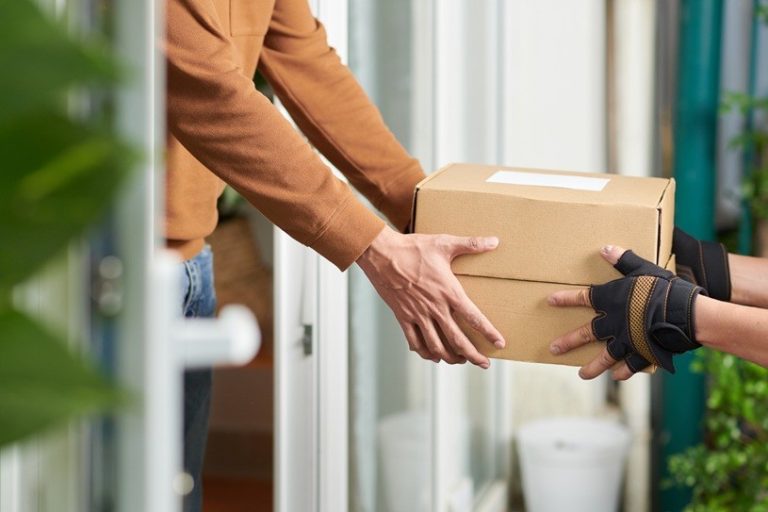
Toy subscription models turn gamification into a business strategy. A child subscribes to a monthly delivery box. Each box contains new quests, new parts, and the next chapter of a continuing story. The child waits eagerly for the package to arrive each month. The anticipation loop keeps the child engaged for the entire year. The toy company gets predictable recurring revenue.
Excited for The Future
Making a hit toy has always been a delicate mix of creativity, timing, and emotional resonance. Trends come and go, but the toys that endure are the ones that connect deeply with how children play and imagine. We believe the next evolution will be toys with longer shelf lives and higher upfront cost, not replacing simple classics, but expanding the market for older children who crave deeper engagement. These toys will function more like live services, with ongoing content updates and evolving experiences. A toy bought in 2026 will still have new missions and rewards in 2027. Hardware will become modular like game downloadable content. A child will buy a base robot and then purchase new ability packs for years. Toys will evolve into platforms with seasons, events, and story arcs. A building toy might have a winter season with snow themed challenges and a summer season with beach themed builds. AI driven toys will personalize challenge and narrative to each child’s skill level. A toy that watches how fast a child solves puzzles will adjust the difficulty automatically. The toy will never be too easy or too hard.
Toys that win in the coming years will share five qualities:
- They will be repeatable so the child wants to play again and again.
- They will be expandable with new parts and missions over time.
- They will be collectible with sets to complete and rare items to find.
- They will be social with trading, competing, and sharing built in.
- They will be story driven with characters and worlds that matter.
Gamification is no longer optional for toy brands that want to survive in a screen first world. The companies that understand game design and apply it to physical play will dominate the next era of the toy industry.
Helping Companies Win the Attention War Through Play
Michael Sorrenti and his team at GAME PILL help companies design products that can compete with screens by turning proven gamification principles into real-world experiences. With 26+ years of experience building games, AI systems, and digital platforms for global brands like Disney, Marvel, and Nickelodeon, they guide teams in transforming physical and digital products into engaging, habit-forming experiences. From behavioral design and toy innovation to AI strategy and product execution, GAME PILL helps turn ideas into products children choose over screens.
- Przybylski, Andrew K., and Netta Weinstein. “A Large-Scale Test of the Goldilocks Hypothesis: Quantifying the Relations Between Digital-Screen Use and the Mental Well-Being of Adolescents.” Psychological Science, 2017.
- Twenge, Jean M. “Have Smartphones Destroyed a Generation?” The Atlantic, 2017.
- Hirsh-Pasek, Kathy, et al. “A New Path to Education Reform: Playful Learning Promotes 21st-Century Skills.” Brookings Institution, 2018.
- Zichermann, Gabe, and Christopher Cunningham. Gamification by Design: Implementing Game Mechanics in Web and Mobile Apps. O’Reilly Media, 2011.
- Chou, Yu-kai. Actionable Gamification: Beyond Points, Badges, and Leaderboards. Octalysis Media, 2015.
- Gray, Peter. Free to Learn: Why Unleashing the Instinct to Play Will Make Our Children Happier, More Self-Reliant, and Better Students for Life. Basic Books, 2013.
- Lillard, Angeline S., et al. “The Impact of Pretend Play on Children’s Development: A Review of the Evidence.” Psychological Bulletin, 2013.
- American Academy of Pediatrics. “Media and Young Minds.” Pediatrics, 2016.
- Montola, Markus, et al. Pervasive Games: Theory and Design. Morgan Kaufmann, 2009.
- Hamari, Juho, et al. “Does Gamification Work? A Literature Review of Empirical Studies on Gamification.” Proceedings of the 47th Hawaii International Conference on System Sciences, 2014.
#Gamification #BehavioralDesign #ToyInnovation #EdTech #Parenting #ScreenTime #GenAlpha #PlayBasedLearning #ChildDevelopment #AttentionEconomy #ProductDesign #GameDesign #LearningThroughPlay #FutureOfPlay #ToyIndustry #DigitalWellbeing #ExecutiveFunction #STEMLearning #InteractivePlay #Innovation