a

Lorem ipsum dolor sit amet, elit eget consectetuer adipiscing aenean dolor

Code, Power, and Politics: The Real AI Race

Throughout history, humans have competed for land, resources, and power. Today, the battleground has shifted. Instead of armies marching across borders, we have algorithms racing through data centers. This new struggle is the AI race—a global contest to build, control, and scale the most powerful artificial intelligence systems.

Three players now sit in the lead: the United States, China, and Singapore. They are not just building new tools; they are quietly shaping the future of economics, geopolitics, and daily life. Unlike past conflicts fought over oil or territory, this race is about information—who owns it, who understands it, and who can turn it into power. In the digital age, data, algorithms, and compute are the new high‑ground, and nations that master them gain a strategic edge.

USA: The Debatable Current Dominant AI Power

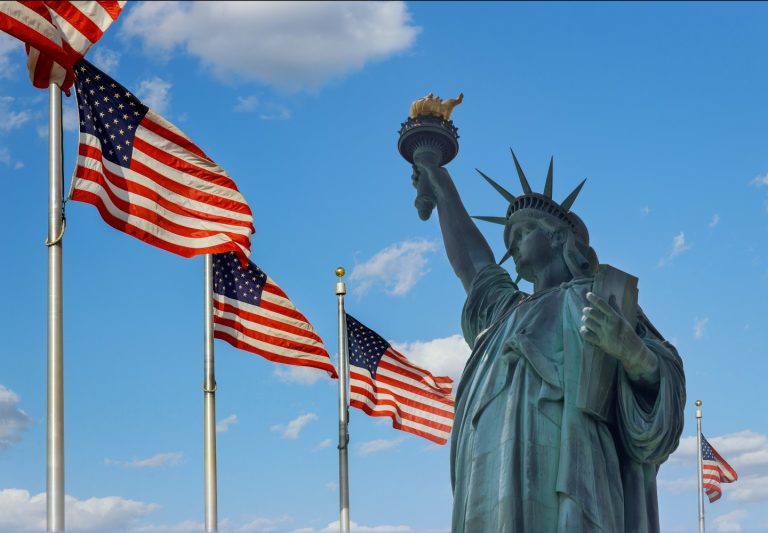
The United States is still the front‑runner in the global AI race, powered by its tech ecosystem, research universities, and culture of risk‑taking. More than 100 billion dollars has been invested into AI systems by government and private actors, creating a dense network of labs, startups, and Big Tech giants that feed off one another’s breakthroughs.


For decades, the U.S. has been the place where many of the world’s most important technologies are born and scaled. Silicon Valley became shorthand for innovation because companies there didn’t just build apps—they rewired how the world communicates, shops, and works. That same ecosystem now fuels AI.


Modern AI as a formal field began in the U.S. at the 1956 Dartmouth Workshop in New Hampshire, where a small group of researchers gathered around a bold idea: that intelligence could be simulated. Their early experiments laid the groundwork for everything from today’s chatbots to self‑driving cars.


Now, the majority of the world’s most influential AI companies are U.S.based such as Google , Microsoft , Meta , OpenAI , Anthropic , NVIDIA , Amazon , and others. They control key pieces of the stack: foundational models, cloud infrastructure, specialized chips, and massive data pipelines.


The U.S. government has woven AI into core public functions as well—defense, healthcare, infrastructure, and security—through federal initiatives and public‑private partnerships. This tight feedback loop between government, academia, and industry helps the U.S. move quickly from research to real‑world deployment.


For now, these strengths keep the U.S. ahead. But that lead is not guaranteed—and the two other major players each bring very different advantages.

China: The Rival

If the U.S. is the current leader, China is the rival that refuses to be left behind. Beijing has made AI a national priority, baking it into long‑term economic and security planning and backing it with aggressive funding and policy support.


China’s greatest asset is scale—especially in data. With a massive population and rapidly digitized economy, it generates enormous amounts of behavioral, financial, and social data that can be used to train AI systems. Combined with strong central coordination, this allows China to roll out large‑scale AI applications quickly across transportation, finance, e‑commerce, and manufacturing.


AI in China is not just a business tool; it is deeply embedded in public administration and social governance. Cities use AI for traffic optimization and urban planning; authorities use it for surveillance, predictive analytics, and social management. The result is a model that blends efficiency with extensive centralized control.


China’s AI ecosystem is anchored by its “BAT+H” companies— Baidu, Inc. , Alibaba Group , Tencent , and Huawei . These firms work closely with the state, turning research into products at remarkable speed and exporting AI‑driven technologies to markets around the world.


Despite this momentum, China faces real constraints: geopolitical tension, export controls on advanced chips, and international concerns about privacy and human rights. Still, its capacity to mobilize resources and scale systems makes it a core challenger that will continue to shape the global AI balance.

Singapore: Rising AI Hub

Singapore’s strategy looks very different from that of the U.S. or China. It can’t compete on population or landmass, so it competes on precision.


Instead of trying to dominate every aspect of AI, Singapore has positioned itself as a tightly run hub: a place where ideas, capital, and talent converge, and where AI can be tested quickly and safely. Its location, digital infrastructure, and pro‑innovation policies make it an attractive base for global companies and researchers.


Initiatives like AI Singapore coordinate government, universities, and industry. The focus is not only on pushing the frontier of research but also on ethical, responsible deployment—ensuring AI systems respect privacy, security, and regulatory standards.


Because Singapore is compact and highly connected, it can move from pilot to national rollout faster than most countries. It applies AI to finance, healthcare, logistics, and urban planning, often as a testbed for solutions that later scale across Asia.


Even though it is smaller than the U.S. or China, Singapore’s combination of foresight, strong institutions, and agility gives it an influence that far exceeds its size.

Other Rising AI Nations

Beyond the top three, several countries are racing up the curve. They may not lead the pack yet, but together they show how diverse AI strategies can be.

  • Germany focuses its AI strategy on Industry 4.0, using automation and AI to upgrade manufacturing, automotive, and industrial systems through tight collaboration between research institutes and engineering‑driven companies.
  • South Korea combines heavy public investment with a powerful tech sector, deploying AI in robotics, healthcare, and smart cities to improve productivity and quality of life.
  • Japan, long known for robotics, is weaving AI into eldercare, mobility, and advanced manufacturing, while using international partnerships to keep its innovation pipeline active.
  • Canada has become a magnet for AI research in areas like deep learning and reinforcement learning, thanks to historic academic strengths and policies that draw global talent and startups.
  • The United Kingdom leans into AI ethics and governance, applying AI in finance, healthcare, and the public sector while trying to shape global rules around trustworthy AI.
  • Israel, with its deep experience in cybersecurity and defense, builds highly specialized AI solutions supported by an energetic startup ecosystem and strong foreign investment.

Each of these countries is betting that AI will underpin their economic and strategic relevance in the coming decades.

Where We Will Be


The AI race is speeding up and it’s no longer just about who has the fastest model or the largest dataset. It’s about who can integrate AI so deeply into their economy and society that it becomes as invisible and indispensable as electricity or the internet.

In the coming years, AI will likely become more specialized and more personal. Systems will quietly optimize traffic flows, personalize healthcare, design new drugs, manage energy grids, and even assist in writing the laws that govern them. It will move from being “a powerful tool” to a foundational layer of modern life.

Whichever country ends up leading that charge, its breakthroughs will not stay confined within its borders. When a nation pushes the frontier of AI forward, others quickly adopt and adapt the new capabilities. Advances in language models, computer vision, or robotics almost always spill over into global research, open‑source projects, and commercial tools.

In that sense, the AI race is not purely a zero‑sum competition. It is also a shared project. Progress in intelligence like progress in medicine or clean energy has the potential to lift the world if it is developed and governed wisely. The open question is not just who will win, but how they will choose to use that win.