Simulated Shoppers Are Here — And Marketers Are Listening

Michael Sorrenti
I help companies design products people can’t stop using | Creative Technologist | Product design & AI Advisory | Builder for Disney, ESPN, Mattel, Marvel & Nickelodeon | Founder, Game Pill
AI customer simulations are transforming engagement. Discover how predictive, personalized, and gamified AI solutions optimize customer experiences at scale.
Businesses have long relied on surveys, focus groups and post-launch data to understand what customers want. Those tools still have their place, but they are slow, expensive and often limited to a narrow slice of participants willing to engage. A new generation of artificial intelligence tools is offering an alternative: the ability to simulate how customers might respond before a product launches, a campaign goes live or an experience is introduced. For companies under pressure to move faster and reduce risk, the appeal is clear: insight without the wait.
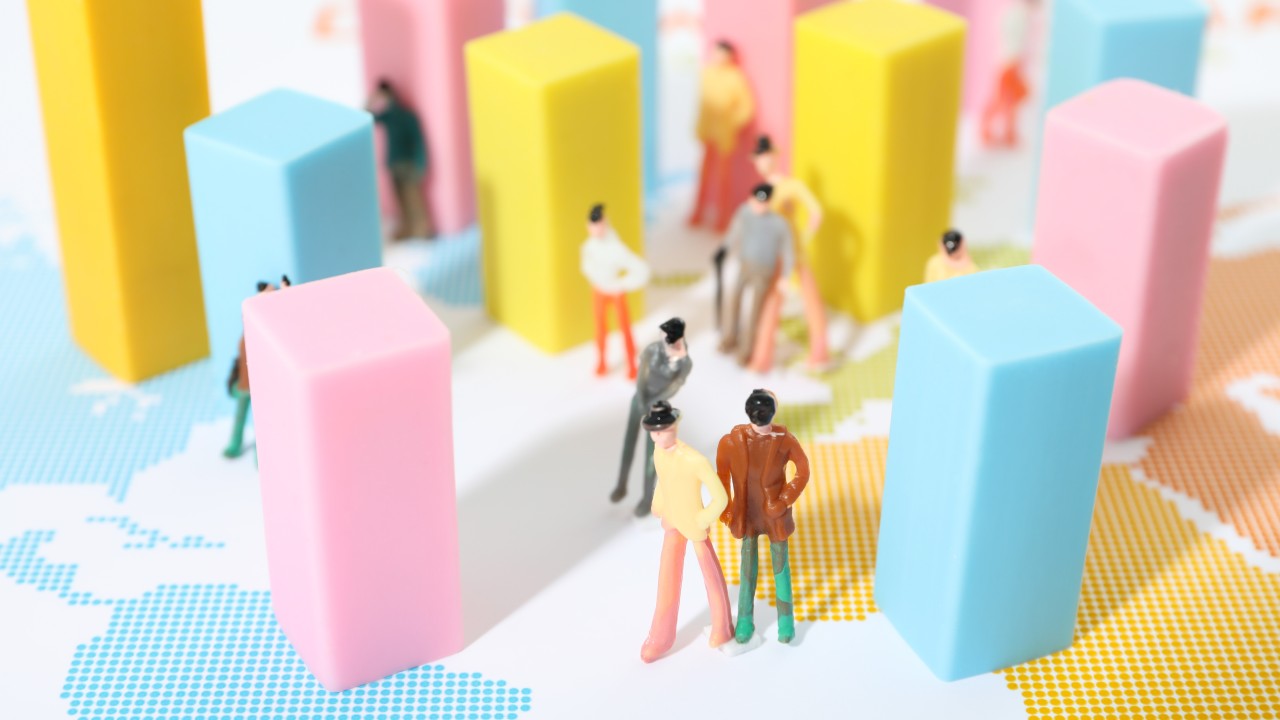
What makes this shift so powerful is the ability to simulate personas at scale. Traditional research methods might capture feedback from a few dozen or even a few hundred participants, but AI powered simulations can model thousands of distinct customer personas simultaneously, each with unique demographics, behaviors, preferences and decision making patterns. A company can test a new product concept against thousands of simulated personas representing different age groups, income levels, geographic regions and purchasing habits in a matter of hours rather than weeks.
This scale reveals nuances that traditional methods often miss, such as how a feature resonates with a niche segment or how a pricing change affects different customer groups in opposing ways. Instead of extrapolating from a small sample and hoping it represents the broader population, businesses can now explore the full diversity of their customer base before making a bet. That is the difference between acting on an educated guess and moving forward with genuine confidence.
From Static Personas to Living Models: How AI Reimagines the Customer

At their core, AI customer simulations draw on large datasets, browsing behavior, purchase history, customer support interactions and other signals to model how different groups are likely to behave. Unlike traditional personas, which are static and often generalized, these models are dynamic. They adjust as new data is introduced, allowing businesses to test ideas against evolving representations of their audience rather than fixed assumptions. The advantage is not just speed but scale. Companies can test pricing strategies, messaging variations and product features across multiple audience segments simultaneously. What once took weeks of research can now be explored in hours.
But the outputs are only as reliable as the inputs. Incomplete or biased data can produce misleading confidence, especially in new markets where historical behavior is limited. Simulations can approximate reality, they cannot fully replace it. Still, organizations across industries are putting these tools to work. In retail, brands simulate how customer segments respond to price changes before rolling them out. In financial services, banks model attrition rates across account holders before introducing new fee structures.
Streaming services simulate subscription pricing and content recommendations before entering new regions. Automakers test how different personas approach electric vehicle purchasing decisions. And healthcare companies simulate patient decision making around treatment adherence and digital health adoption. Across sectors, the pattern is the same: test assumptions in simulation, uncover blind spots and move forward with greater confidence.
Putting Predictive Customers to Work

Consider how a retail brand might construct an AI powered persona. A 38 year old mother of four living in suburban Texas, with a household income of $95,000, who shops for groceries twice a week, consistently buys organic dairy products, abandons carts when shipping exceeds $10 and has contacted customer support three times in the past year about delayed deliveries. Traditional research might summarize this group with a static label like “value conscious suburban mom,” but an AI simulation brings this persona to life with behavioral depth, allowing the brand to test how she responds to a new loyalty program, an $8.99 subscription delivery option or a competitor’s pricing promotion. Now multiply that across thousands of distinct personas, each with unique demographics, behaviors and preferences, and the power of simulation at scale becomes clear.
Companies across industries are already putting these predictive customers to work. Procter & Gamble uses simulations to test consumer responses to new product formulations and packaging designs before committing to large scale production, allowing the company to refine concepts based on simulated feedback from thousands of household personas representing different demographics and shopping habits. Walmart has employed simulation tools to model how changes to its online checkout flow affect conversion rates across customer segments, identifying friction points that would have taken months to uncover through traditional A/B testing.
In the automotive sector, General Motors uses AI simulations to model how different buyer personas approach electric vehicle purchases, simulating factors like range anxiety, home charging access and price sensitivity to shape marketing messaging and dealer training.
In financial services, JPMorgan Chase has deployed simulation models to test how customers across income levels and geographic regions might respond to new digital banking features, allowing product teams to prioritize development based on simulated adoption rates rather than internal guesswork.
For these companies, simulation has moved from an experimental tool to a standard part of how they test assumptions and reduce risk.
Smarter Campaigns: How Marketing Uses Simulations

Marketing teams are among the earliest adopters of simulation technology. Instead of relying on instinct or broad assumptions, they can now simulate how different audiences may respond to campaigns before committing a budget. This allows for more targeted decisions and reduces the likelihood of costly misfires. Consider a global beverage company planning a summer campaign. Rather than launching with a single approach and hoping for the best, the marketing team runs parallel simulations showing how Gen Z responds to TikTok influencer content versus how suburban parents react to connected TV ads.
The simulation reveals that one creative variant drives three times higher purchase intent among the target demographic but would underperform if paired with the originally planned media mix. By adjusting the allocation before campaign launch, the team avoids a projected $2 million in wasted ad spend.
What once required guesswork and post-mortem analysis can now be optimized upfront. By testing creative assets, channel combinations, and audience segments in a simulated environment, marketing teams gain the confidence to commit budgets with greater precision. The result is not only improved return on investment but also a more agile approach to campaign planning that can adapt to insights before real dollars are on the line.
Building Better Products Through Simulation

Product teams are using simulations to identify friction points before launch. By modeling how users might interact with a feature or interface, companies can refine experiences earlier in the development cycle, avoiding the expensive process of fixing issues after release.
A fintech company preparing to launch a new international money-transfer feature offers a compelling example. Before writing a single line of production code, the product team creates thousands of simulated user journeys covering scenarios like first-time users, users encountering verification errors, and users transferring unusual amounts to identify where friction causes drop-off. The simulation shows that a poorly placed identity verification step would cause 18 percent of users to abandon the flow, particularly among older demographics.
By reordering the steps and adding clearer progress indicators based on simulation insights, the team reduces projected abandonment to 4 percent before development even begins, saving months of post-launch rework and preserving customer trust. Simulations allow product teams to fail fast in a controlled environment rather than in front of real users, turning potential post-launch crises into pre-launch optimizations.
Expanding Applications Across the Organization
Customer experience is another growing application. Businesses are testing website flows, app interactions, and even loyalty programs in simulated environments, exploring how small design choices influence engagement over time. A retailer, for instance, might simulate how moving a promo code field to a different screen affects cart abandonment across thousands of virtual shopping sessions, uncovering patterns that would take months to detect in live A/B testing.
Simulations are also being used behind the scenes to train AI driven support systems. Instead of learning solely through live interactions where mistakes can damage trust, chatbots and digital agents can be trained through thousands of simulated conversations before ever engaging with real customers. A telecommunications company, for example, might generate millions of simulated customer service interactions covering edge cases like account recovery after a SIM swap or billing disputes during an outage.
The use of simulations continues to expand across industries. In supply chain and operations, retailers simulate holiday shopping surges to test how inventory allocation algorithms perform under stress, identifying stockout risks before real demand hits. In cybersecurity, security teams simulate thousands of attack scenarios against their cloud infrastructure to test incident response playbooks without exposing real systems to risk.
What unites these applications is a fundamental shift. Organizations are increasingly choosing to learn in simulation before they are forced to learn in reality, making the ability to model complexity before committing resources a competitive necessity rather than a nice to have advantage.
Fewer Surprises. Smarter Moves. Better Results.
The case for AI simulations is straightforward: fewer surprises, faster iteration and more informed decisions. By anticipating how customers might behave, companies can shift from reactive problem-solving to proactive design.
There is also a financial argument. Misjudged campaigns, poorly received features and flawed user experiences are expensive to correct. Simulations offer a way to identify risks earlier, when adjustments are still relatively low-cost.
At scale, they make personalization more achievable. Rather than designing for an average user, businesses can explore how different segments respond to different experiences, moving closer to tailored interactions without the need for constant manual intervention.
Still, there are limits. Human behavior is shaped by context, emotion and unpredictability, factors that no model can fully capture. Overreliance on simulation risks creating a false sense of certainty, particularly when decisions are made without real-world validation.
AI Can Imitate Behavior — But Not Understanding
Even the most advanced simulation tools depend on human judgment. Designing meaningful models requires an understanding of customer psychology, behavior patterns and the broader context in which decisions are made.
Without that perspective, simulations can produce results that appear precise but lack depth. They may reflect patterns in the data while missing the underlying reasons those patterns exist.
The most effective use of these tools comes from combining technical capability with domain expertise. Businesses that treat AI as a complement to human insight, rather than a replacement, are more likely to generate results that hold up beyond the model.
Adaptive, Real-Time, and Deeply Personal: The Next Wave of Simulation

Customer simulations are expected to become more adaptive and more integrated across platforms. Future systems may respond in real time, adjusting predictions as customers move between devices, channels and environments.
This could be particularly valuable for experiences that depend on sustained engagement, such as digital platforms, learning systems and loyalty programs. Simulations may increasingly mirror not just isolated decisions, but ongoing behavior.
Personalization will likely deepen as well. Instead of broad segmentation, models may refine experiences moment by moment, reacting to hesitation, interest or disengagement as it occurs.
But as the technology evolves, a central question remains: not whether predictions will improve, but how they will be used. The risk is not that simulations fail, it is that they are trusted too completely.
Simulation Isn’t Replacing Research — It’s Redefining It
AI customer simulations are not replacing traditional methods of understanding customers. They are reshaping them.
Surveys, conversations and lived experiences still provide something models cannot fully replicate: context. What simulations offer is a new layer, faster, broader and increasingly sophisticated.
For businesses, the shift is less about abandoning old tools and more about expanding the toolkit. The companies that benefit most will not be those that rely solely on prediction, but those that use it to ask better questions.
Helping Teams Create Products That Actually Stick
Michael Sorrenti Sorrenti and his team at GAME PILL help companies turn ideas into products people can’t stop using. With 26+ years of experience creating games, AI experiences, and digital platforms for global brands like Disney, Marvel, and Nickelodeon, they guide teams to design and launch products that drive engagement, revenue, and growth. From AI strategy and product design to market-ready execution, Michael and the Game Pill team turn complexity into actionable results.
- Davenport, Thomas H., and Steven M. Miller. “The Future of AI in Customer Experience.” Harvard Business Review, 2023. https://hbr.org/2023/05/the-future-of-ai-in-customer-experience
- McKinsey & Company. “The State of AI in 2023: Generative AI’s Breakout Year.” McKinsey Global Institute, 2023. https://www.mckinsey.com/capabilities/quantumblack/our-insights/the-state-of-ai-in-2023
- Accenture. “Personalization Pulse Check: The New Rules of Customer Engagement.” Accenture Research, 2022. https://www.accenture.com/us-en/insights/interactive/personalization-research
- PwC. “Experience Is Everything: Here’s How to Get It Right.” PwC Consumer Intelligence Series, 2023. https://www.pwc.com/us/en/advisory/customer-experience.html
- Gartner. “Predictive Analytics and Customer Behavior Modeling.” Gartner Research, 2023. https://www.gartner.com/en/insights/data-analytics
- Salesforce. “State of the Connected Customer.” Salesforce Research, 2023. https://www.salesforce.com/resources/research-reports/state-of-the-connected-customer
- IBM. “AI-Powered Personalization: How Real-Time Data Shapes Customer Journeys.” IBM Insights, 2023. https://www.ibm.com/watsonx
- Forrester. “The Rise of AI-Driven Customer Experience.” Forrester Research, 2023. https://www.forrester.com/blogs/category/customer-experience
#AICustomerSimulations #CustomerExperience #AIAutomation #PredictiveAnalytics #PersonalizationAI #GamificationStrategy #AdaptiveSoftware #DigitalTransformation #FutureOfCX #AIInnovation #CustomerJourney #MachineLearning #ProductDesign #UserEngagement #TechLeadership #BusinessStrategy #AIForBusiness #DataDrivenDesign #CXOptimization #InnovationEcosystem