Sensor Technology Is Transforming Toys, Wearables, and Consumer Products

Michael Sorrenti
I help companies design products people can’t stop using | Creative Technologist | Product design & AI Advisory | Builder for Disney, ESPN, Mattel, Marvel & Nickelodeon | Founder, Game Pill

The smartest products no longer wait for instructions. They sense what is happening around them — and respond.
For most of their history, toys and consumer gadgets were passive. You pressed a button, flipped a switch, or wound a spring, and the object did exactly one thing. What it could not do was notice you. It had no sense of how it was being held, how fast it was spinning, how bright the room was, or whether anyone was nearby.
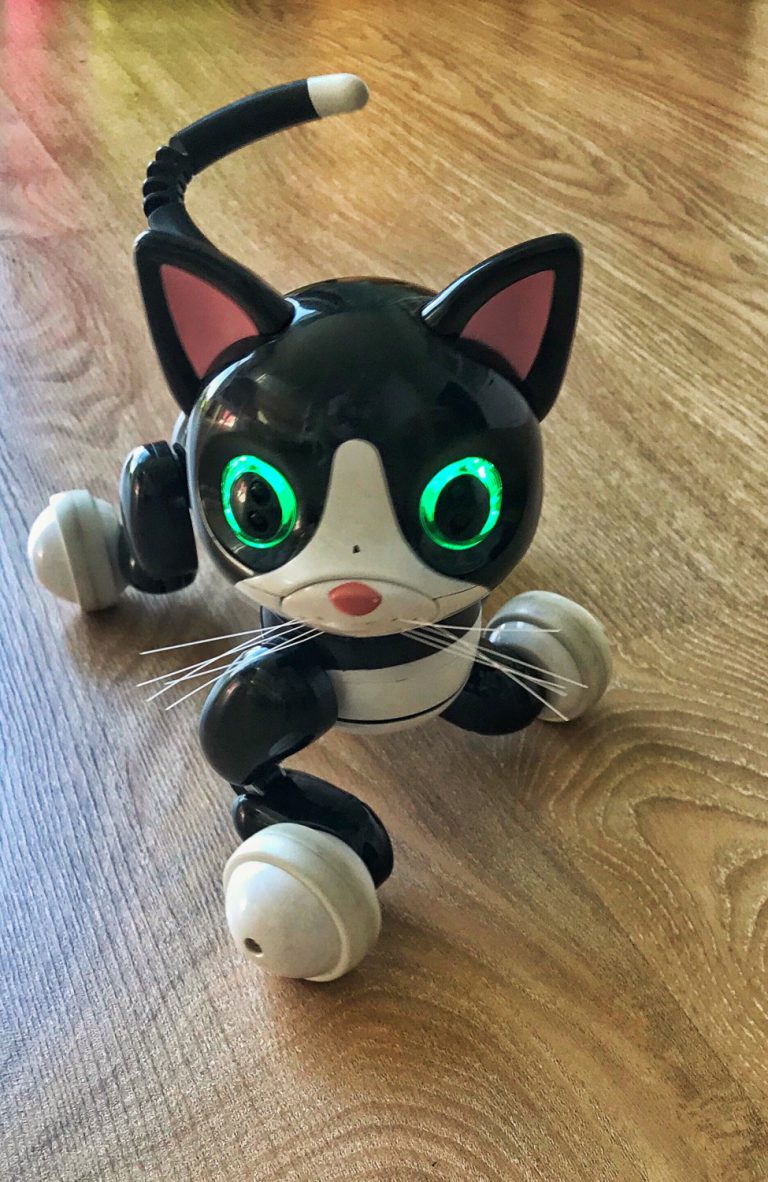
A small, inexpensive stack of sensors has quietly changed that. The same components that turned phones into pocket computers now sit inside spinning tops, plush companions, earbuds, fitness bands, and smart-home devices. Individually each sensor measures one narrow thing. Together they give an ordinary object a rough sense of motion, body, environment, sound, touch, and proximity, allowing it to react in ways that feel alive. What follows is an exploration of the main sensor families and how they are used in products people buy every day.
Motion Sensors: Accelerometers, Gyroscopes, and IMUs
Motion sensing is the foundation of nearly every responsive product. An accelerometer measures linear movement and acceleration; a gyroscope measures rotation and angular velocity; and an IMU combines the two so a device can track how it is moving through space in real time. None of this requires a camera or a screen, only a chip smaller than a grain of rice.
In consumer products, this is the sensing you already rely on without thinking about it. Your phone rotates the screen when you turn it sideways, your earbuds register a double-tap, your watch counts steps and flags a fall, and a game controller translates a flick of the wrist into action on screen. The product feels intuitive precisely because it is reading your movement rather than waiting for a deliberate command.
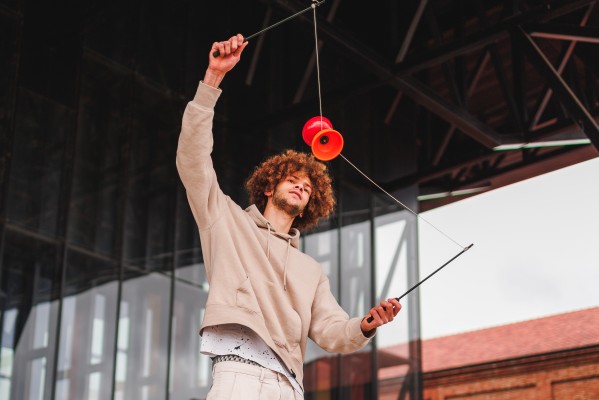
In toys, the same sensing becomes play itself. A spinning top can power up the harder you spin it, a plush figure can wake when it is shaken, and a handheld toy can be steered by tilting it. By understanding motion, the toy allows the child’s physical movement, rather than a button press, to drive what happens next. A spin, a swing, or a flick becomes the input, and that subtle shift is what separates a toy that truly responds from a toy that simply sits there.
Physiological Sensors: Reading the Body
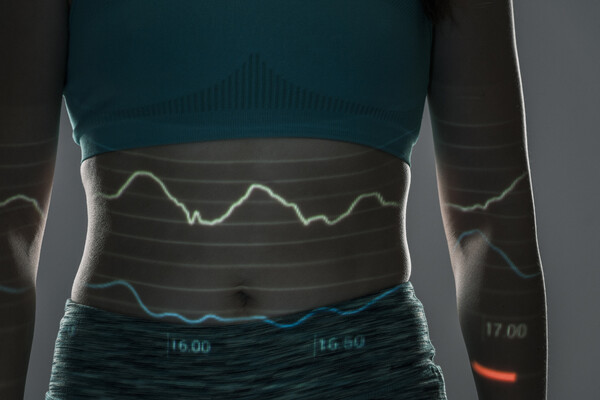
A second family of sensors looks inward, at the person rather than the object. Optical heart-rate sensors (PPG) track pulse and heart-rate variability, electrodermal sensors pick up subtle changes in arousal and stress, and skin-temperature sensors follow longer trends in the body. Where motion sensors ask how something moves, this group of sensors asks how a person is doing.
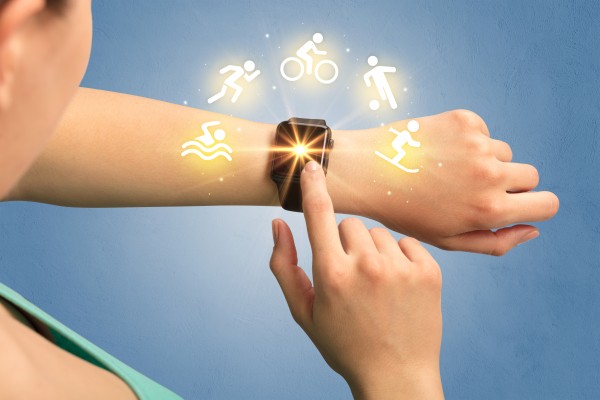
This is the heart of modern consumer wearables. A smartwatch or fitness band uses these signals to show heart-rate zones during exercise, to estimate recovery and readiness in the morning, to track sleep quality, and to nudge you when stress is running high. The device stops being a passive log of what you did and starts responding to how your body is actually performing.
In toys, the same idea takes a gentler form. An interactive companion can shift from a calm, comforting presence to a more playful, energetic personality based on how it is being handled, while also responding to a child’s presence, actions, and emotional cues. The toy does not need clinical accuracy. It needs enough sensing to feel attentive, creating the impression that it noticed you and reacted with purpose.
Environmental Sensors: Sensing the Room
Environmental sensors give a product awareness of its surroundings. Light sensors detect day and night or whether a room is bright or dark, barometers and pressure sensors register altitude and changes in elevation, temperature and humidity sensors read conditions, and proximity sensors notice when something is close. These are the signals that let a device understand where it is and what is happening around it.
Consumer products use this context constantly. A phone dims or brightens its display to match the room, a smart speaker adjusts to ambient conditions, and smart-home devices coordinate lighting and climate based on what the environment is doing. The behavior feels considerate because the product is quietly adapting to its setting rather than ignoring it.
Toys use the same awareness to come to life at the right moment. A toy can wake up when the lights come on or when a child walks near, and it can behave differently from one room to the next, giving the impression that it belongs to the space rather than simply occupying it. Environmental sensing is what lets a toy seem to notice the world, not just the hands holding it.
Audio and Vibration Sensors: Sound and Impact as Input
Microphones and small piezo elements let a product hear and feel. A microphone captures sound and voice, while a piezo sensor detects taps, hits, and vibration. Together, they transform sound and physical contact into signals a device can understand and respond to, opening the door to interactions that require no buttons at all.
In consumer products, this appears as voice-first control and ambient awareness. Smart speakers and earbuds respond to spoken commands, devices react to the sounds around them, and headphones automatically adjust when you begin speaking. Sound becomes a natural, hands-free way to control the product.
In toys, audio and vibration make play immediate and physical. A toy can activate when a child claps, a character can react to sounds and voices, and a musical toy can respond to rhythm and touch. With a trigger as simple as a clap or a tap, even very young children can interact without instructions, and the toy feels responsive from the very first moment.
Touch and Force Sensors: Precise Physical Interaction
Touch and force sensors read direct physical contact. Capacitive touch sensors detect taps, swipes and gestures, force and pressure sensors measure how firmly something is squeezed or pressed, and proximity sensors register when a hand is hovering nearby. Together, this family of sensors turns the surface of a product into a sophisticated input device with responds not just to touch, but to the way it is touched.
Consumer products lean on this for interfaces that feel natural: touch-sensitive surfaces, hover and proximity gestures, and pressure-sensitive controls that distinguish a light press from a firm one. The result is a more natural and intuitive way to interact, one that feels far more human than a row of mechanical buttons.
In toys, touch and force become a kind of dialogue. A toy can charge up the harder it is squeezed, respond to being held or stroked, and provide physical and emotional feedback that reflects the way a child interacts with it. The interaction is tactile and direct, which is exactly how young children naturally explore the world.
Connectivity: Bluetooth, NFC, RFID, UWB, and GPS
Connectivity sensors are what let a product stop being an island. Bluetooth and ultra-wideband handle short-range links and precise positioning, NFC and RFID enable tap-to-recognize interactions, and GPS provides location. With these, a device can find other devices, recognize nearby objects, and place itself in the world.
For consumer products, these sensing technologies make a connected ecosystem possible. Devices pair effortlessly, recognize accessories, and move seamlessly from phone to wearable to smart home. Instead of functioning as isolated products, they work together as parts of a single, coordinated experience.
For toys, connectivity unlocks shared play. Toys can interact with one another when they are brought close, unlock new content with a simple NFC tap, and carry progress across a whole collection so that several physical toys feel like parts of one larger world. Play stops being solitary and becomes social and expandable.
High-Frequency Motion Intelligence
One more layer is worth exploring because it is where motion sensing becomes genuinely impressive. When the same inertial sensors are sampled at high speed, a device can understand far more than the fact that something moved. It can recognize the fine details of the movement, including how an object spins, how that motion changes over time, the signature of a particular trick or gesture, and the difference between a smooth, controlled motion and an inconsistent one.
This is what allows a spinning toy to know whether it is winding down or still going strong, recognize specific tricks and reward skills that improve with practice. The same capability gives consumer products motion-based shortcuts, gesture controls, and even motion signatures unique enough to help identify a user. At this level of precision, movement stops being a simple trigger and becomes an expression of skill, forming the foundation for products that users can improve at over time.
When the Sensors Work Together
Any one of these sensors is modest on its own. The real transformation happens when they work together. A single product can understand how it is moving, how its user is interacting with it, sense the surrounding environment, hear sounds, respond to touch, recognize nearby devices, and combine those signals into a single, intelligent response.
That is the line between a passive object and a responsive one. A toy stops being a static thing on a shelf and becomes a companion with moods, rules, and progression. A consumer device stops being a tool you simply operate and becomes a product that adapts to you. As the underlying components become more affordable and increasingly standardized, this level of intelligence is no longer reserved for premium gadgets. It is becoming the new standard for smart product design.
The next generation of toys and consumer products will be judged less by their screens or buttons and more by how well they notice and respond to the people using them. That means recognizing how you move, how you interact, what is happening around you, and responding in ways that feel natural and intuitive. The sensors may be small, but they unlock an entirely new relationship between people and the products they use every day.
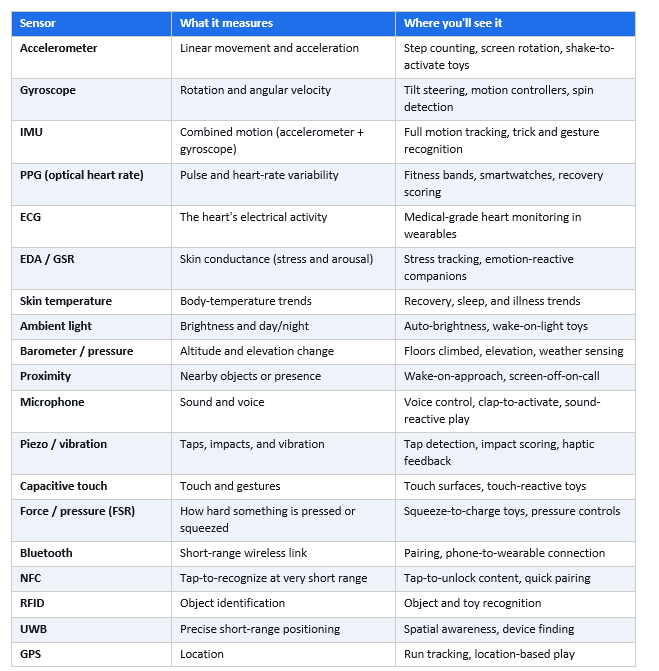
Glossary: Typical Sensors at a Glance
The table below provides a quick reference to the sensors discussed above and the ways they are commonly used in toys and consumer products.
LETS TALK
Michael Sorrenti and his team at GAME PILL help companies design products that are smarter and more useful by applying proven gamification and behavioral-design principles to real-world, sensor-driven experiences.
With more than 26 years of experience building games, AI systems, and digital platforms for global brands like Disney, Marvel, and Nickelodeon, they guide organizations in transforming physical and digital products into engaging, habit-forming experiences. From behavioral design and toy innovation to AI strategy and product execution, GAME PILL helps create products that children return to again and again.
#SensorTechnology #SmartToys #WearableTechnology #IoT #InternetOfThings #SmartProducts #InteractiveDesign #ProductDesign #ExperienceDesign #ToyIndustry #ConsumerElectronics #ProductInnovation #HardwareDesign #EmbeddedSystems #TechInnovation #FutureOfProducts #ConnectedDevices #HumanComputerInteraction #UXDesign #PhysicalComputing #InteractiveExperiences #DesignThinking #Innovation #DigitalTransformation