Lorem ipsum dolor sit amet, elit eget consectetuer adipiscing aenean dolor
What Immersive Exhibit Design Looks Like
Michael Sorrenti
I help companies design products people can’t stop using | Creative Technologist | Product design & AI Advisory | Builder for Disney, ESPN, Mattel, Marvel & Nickelodeon | Founder, Game Pill
For decades, exhibits and trade show booths ran on the same tired formula: put up some signage, print a few stats, and hope someone slows down long enough to read it. That model is dead on its feet. People don’t want to be talked at anymore—they want to grab the controls. Immersive exhibit design is the answer, and it borrows its best ideas from an unexpected playbook: game design.
What is immersive exhibit design?
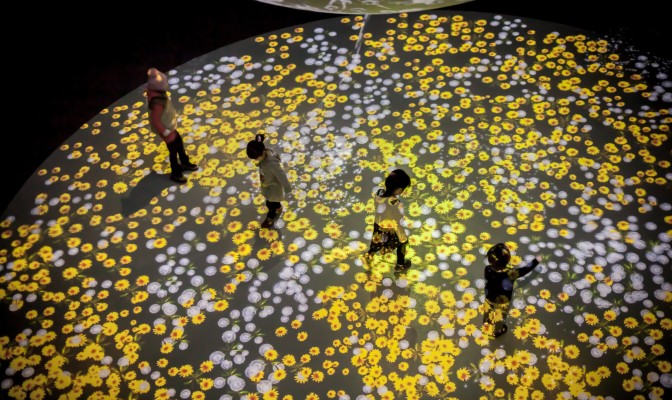
Immersive exhibit design is the practice of building physical environments, supercharged with digital experiences, that turn a passive crowd into active participants. Instead of just presenting information, these spaces use interaction, challenge, feedback, and storytelling to pull people through a structured experience, much the way a well-built game keeps a player leaning forward.
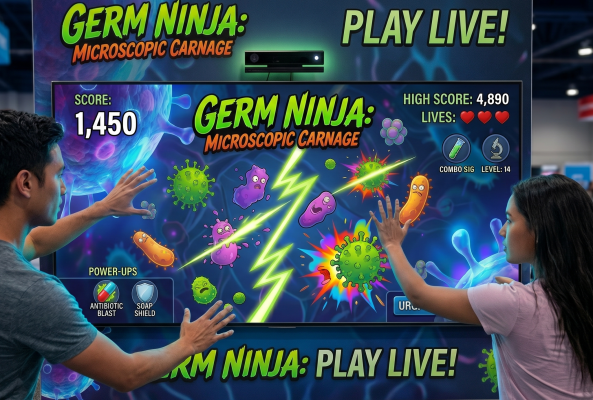
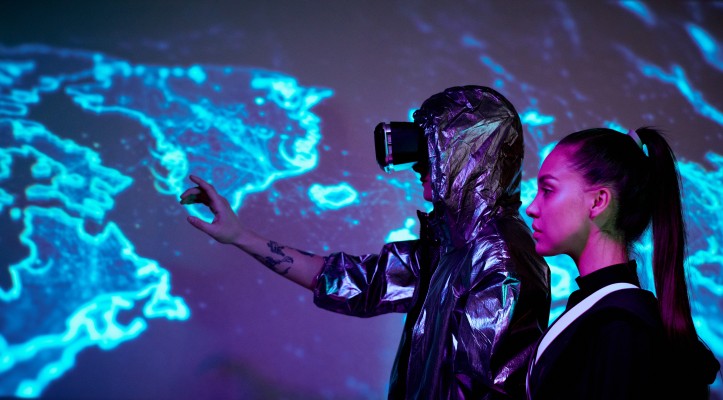
In the room, that shows up as multitouch displays that a whole group can crowd around, touch displays that let visitors explore a product at their own pace. AR visualizations that allow people to explode a product into its components and rotate it in mid-air, and gamified challenges such as racing games, head-to-head trivia, and puzzles that transform a marketing message into something people actually want to win. But the hardware itself is not the point. The real difference is the philosophy behind it.
People don’t just look at the exhibit, they play it.
Where a traditional booth leans on static signage and polite nodding, an immersive exhibit behaves like an interactive system. It rewards curiosity, invites exploration, and turns information into something experiential and genuinely hard to forget. In that sense, immersive exhibits are becoming a category of their own: physical-world gamification systems.
How we help build immersive exhibits
We build interactive systems that turn physical and digital spaces into experiences people take part in, not just walk past. This includes immersive exhibits, trade show activations, gamified environments, and custom interactive software for brands, museums, events, and experiential spaces.
At the core of what we do is not visual design—it’s experience engineering.
We design the underlying structure of interaction: the moment-to-moment loop that decides what people do, how the system answers back, and why they keep going. That means progression systems built on discovery, challenge, and reward; narratives that bend to how someone behaves; and interfaces that turn poking around into a guided experience instead of passive scrolling.
Some of the tools we use:
• Multitouch and touch displays — from single-user product explorers to large-format walls several people can drive at once.
• AR product visualizations — letting visitors see inside a machine, layer on live data, or place a product in their own context without anyone hauling the real thing to the show floor.
• Competitive games — racing games, score-chasers, and head-to-head trivia that turn a quiet booth into the loudest corner of the hall.
• Puzzles and missions — collaborative challenges that get people talking, comparing notes, and learning the product without realizing it.
• Real Time Giveaways — custom printed items that are customized to the visitor
Put it all together and we’re not just producing exhibits or installations.
We’re creating software-driven experiences where interaction, storytelling, and game mechanics work together to capture attention, deepen engagement and leave a lasting impression. The best experiences make even the most complex ideas feel intuitive and playable within seconds. The goal isn’t simply to explain. It’s to spark discovery, allowing understanding to emerge naturally through interaction rather than arrive as a lecture.
How we work with fabricators and architects
Immersive exhibit design doesn’t happen in a vacuum. It lives at the messy, interesting intersection of architecture, fabrication, engineering, and interactive software. We work shoulder-to-shoulder with fabricators, architects, exhibit builders, and environmental designers to make sure every experience is not only interactive, but physically buildable, structurally sound, and seamlessly part of the real-world space.
Our lane is the experience layer: gamification, interaction design, software systems, and engagement mechanics. Our partners bring the physical world to life through materials, construction, and spatial design. We typically start with multiple design concepts.
Bridging physical space and digital interaction
Working hand-in-hand with fabrication teams, we ensure the interactive elements are seamlessly integrated into the structure. Multitouch displays, sensors, AR camera rigs, and game hardware all need to integrate cleanly into the build. Game systems must respect the physical flow of the space and its and spatial constraints, while durability and real-world wear-and-tear must be considered from day one. A racing game that thousands of people will play over the course of a three day trade show must perform flawlessly from the first interaction to the last.
In parallel, we collaborate with architects and spatial designers to ensure the experience enhances the space instead of competing with it. That means aligning early on visitor flow, sightlines and visual hierarchy, where the interactive moments sit within the architecture, and the lighting, materials, and environmental storytelling that tie everything together.
Why this collaboration matters
The best immersive exhibits are created when architecture, fabrication, and gamified interaction design evolve together from the outset, rather than developed in isolation. When these disciplines align early, the payoff is concrete: smoother user experiences, fewer surprises during fabrication and installation, stronger storytelling through physical space, greater reliability once the exhibit is live, and more intuitive interactions for visitors. Instead of forcing technology into a finished space, we design the environment and the interactive experience as a single, integrated system.
Why are immersive spaces more effective?
Immersive booths and exhibits outperform traditional ones because they run on the same principles that make games impossible to put down: clear objectives, instant feedback, curiosity loops, and rewards. Instead of asking attendees to read, listen, or politely absorb, they invite them to play.
That shift from passive observation to active engagement is reflected in the metrics that matter: longer dwell time, stronger emotional recall, more meaningful conversations, better-qualified leads, and increased word-of-mouth. In gamification terms, the booth stops being a static marketing surface and becomes a playable experience people line up for.
Why participation and multiplayer experiences increase engagement
One of the biggest leaps in immersive exhibit design is the move from solo interaction to social participation. The moment visitors stop observing and start participating by competing, collaborating, or solving challenges together, engagement increases drastically. It’s one of the core principles of game design: humans don’t just remember what they see. They remember what they experience, especially when that experience engages them socially and emotionally.
Head-to-Head Experiences: Competitive Engagement
Head-to-head interactions bring friendly rivalry into the room through timed challenges, score-based games on kiosks and touch displays, live leaderboards, racing games, and rapid-fire trivia battles. Competition sharpens focus and creates a sense of urgency. People naturally pay closer attention when there is a challenge to overcome or someone to beat. In an exhibit, that means visitors don’t just learn about your product. They strive to master it, then invite colleagues to join in and see who comes out on top.
Collaborative Experiences: Shared Problem Solving
Collaboration creates a different but equally powerful form of engagement. Instead of competing, participants work together to crack interactive puzzles, explore product features, complete mission-based challenges, or unlock shared rewards. This style of play naturally sparks conversation, problem-solving, and shared decision making, mirroring the real-world rooms where buying decisions actually get made. As participants talk through challenges and explain their thinking, understanding deepens, key messages are reinforced, and the experience becomes far more memorable.
Why social participation improves messaging and education
Competitive or collaborative, social interaction amplifies everything an immersive exhibit is trying to do. It increases time spent with the content, gets participants explaining ideas to each other, and builds emotional memory through shared experience. Abstract concepts become easier to grasp through collective problem-solving, and passive messaging turns into active discovery. Instead of a brand reciting its story, participants live it and reinforce it together.
The gamification effect
From a gamification standpoint, adding social dynamics transform an exhibit from a solo interaction into a continuous cycle of engagement, where one participant naturally attracts the next. Competition drives attention. Collaboration drives understanding. Both drive memory. That’s why multiplayer design, whether head-to-head or cooperative play, have become one of the most effective tools in immersive experience design.
What industries benefit most from immersive exhibit design?
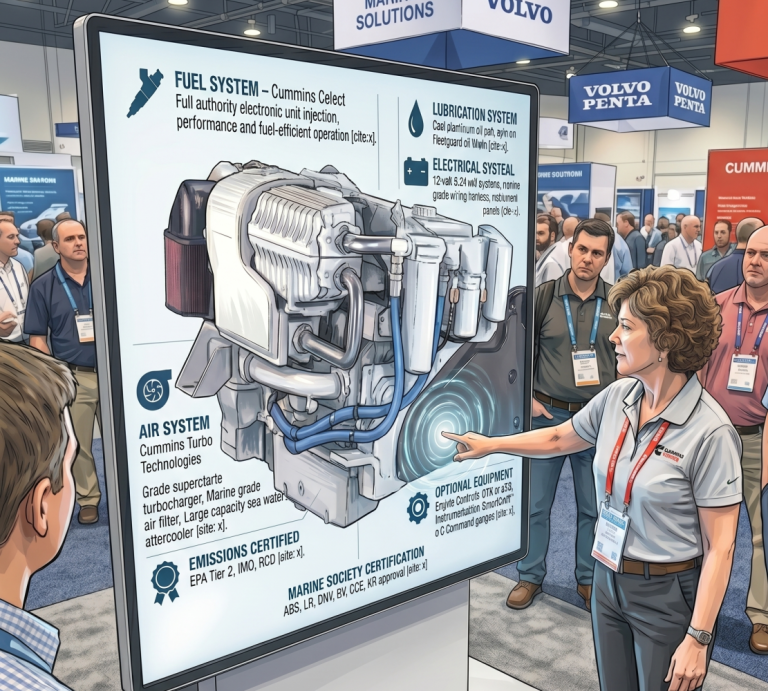
Industries that wrestle with complex systems benefit most, because interaction does the heavy lifting a brochure simply cannot. That includes aerospace and defense, manufacturing and industrial systems, energy and sustainability, healthcare and medical technology, and advanced software and AI.
These industries share a common challenge: their products and technologies are often too complex to explain quickly. Gamified immersive exhibits overcome that challenge by transforming complexity into intuitive hands-on experiences.
Whether visitors are exploring the inner workings of a jet engine through augmented reality, operating a virtual reactor on a touchscreen, or solving an interactive puzzle that quietly teaches how a system fits together, they gain understanding through participation rather than passive observation.
How much does an immersive trade show booth cost?
The cost of an immersive trade show booth tracks the sophistication of the experience design, not just the hardware. Basic interactive experiences, such as a polished touchscreen explorer or a single trivia game, can start in the tens of thousands of dollars. More advanced systems, including multiplayer racing games, AR product visualizations, custom software, real-time data integration, or large-scale multitouch walls, can climb into the hundreds of thousands or more. In gamification terms, cost scales with the depth of the engagement system, not the size of the screen.
How long does it take to design an immersive exhibit?
Most immersive exhibit projects run anywhere from several weeks to several months, depending on complexity. A typical process moves through:
• Experience design (defining the engagement loop)
• Narrative and interaction flow development
• UI/UX design for both physical and digital interfaces
• Software development and integration
• Testing and iteration based on real user behavior
Simpler experiences, such as informational touchscreens, head-to-head trivia, or simple puzzles, can come together quickly.
More ambitious installations like multiplayer racing games or sensor-driven AR need tuning, much like balancing a game until the engagement feels effortless and the difficulty curve is just right.
What makes a good immersive exhibit or space?
A strong immersive exhibit company thinks less like an agency and more like a game design studio for the real world. The capabilities that matter: designing engagement loops instead of just visuals, translating complexity into interactive systems, understanding behavioral psychology and motivation, building clear feedback for users, marrying storytelling and interaction design, and iterating based on how people actually behave, not how a design-deck says they should.
The best teams don’t open with “What should it look like?” They start with the harder, more useful question: Why will anyone keep playing with this?
How do immersive exhibits support sales and marketing?
Immersive exhibits lift sales and marketing because they swap explanation for experience. Instead of telling someone how a product works, your team can let them explore it through interaction, adapt the messaging to what they do, use gamified discovery to steer attention, turn features into playable moments, and build shared experiences that anchor the sales conversation.
The effect is hard to fake: understanding happens through play, not persuasion. When people engage directly by racing the simulation, winning the trivia round, or solving the puzzle, they retain more and walk into the sales conversation already educated and emotionally invested.
Why are companies investing more in immersive experiences?
Attention has become the world’s scarcest currency, and passive communication simply can’t compete. Modern audiences expect interaction instead of observation, personalization instead of one-size-fits-all messaging, and discovery instead of explanation. Gamified immersive design meets these expectations by transforming environments into participation systems rather than presentation spaces.
There’s a practical driver too. As products become more complex, companies are realizing traditional marketing simply can’t explain everything fast enough. Interaction closes the gap.
From Exhibits to Engagement Engines
Immersive exhibit design is growing into something much larger than experiential marketing. It’s becoming real-world gamification design, where physical spaces behave like interactive systems and audiences become active participants rather than passive viewers.
Combine storytelling, interaction design, and game mechanics with multitouch displays, AR product visualizations, racing games, head-to-head trivia, puzzles, and the software that ties them together, and you fundamentally change how people understand, remember, and engage with complex ideas.
In a world where attention is the scarcest currency, the experiences that endure aren’t the ones people simply see.
They’re the ones people play, explore and remember.
Michael Sorrenti and his team at GAME PILL help brands turn audiences into players by translating proven gamification principles into real-world, immersive experiences. With 26+ years building games, AI systems, and digital platforms for global brands like Disney, Marvel, and Nickelodeon, they engineer the interactive systems behind immersive exhibits, trade show activations, and gamified environments—multitouch displays, AR product visualizations, racing games, head-to-head trivia, and puzzles. From experience engineering and interaction design to custom software and AI strategy, GAME PILL helps companies transform complex products into experiences people remember—and play.