Why We’re Still Training People Like It’s 1995

Michael Sorrenti
I help companies design products people can’t stop using | Creative Technologist | Product design & AI Advisory | Builder for Disney, ESPN, Mattel, Marvel & Nickelodeon | Founder, Game Pill

At a time when AI is reshaping entire industries and labor shortages are affecting critical sectors, we continue to prepare workers using methods designed for a different century. That’s no longer just a training problem. It’s an economic one.
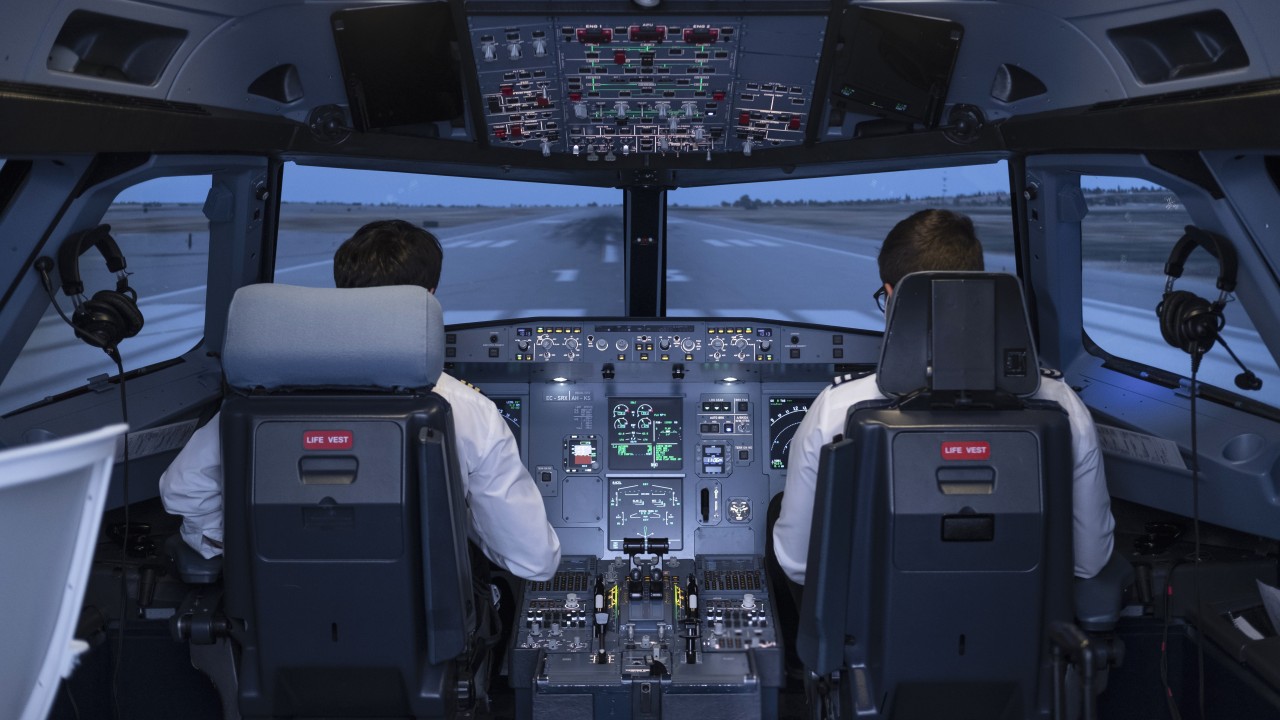
Imagine telling a pilot that the safest way to learn how to fly is by reading a textbook. We instinctively know that’s not enough, even if we’ve never stepped inside a cockpit.
Or telling a surgeon that their first procedure will be performed on a real patient because there wasn’t enough time to practice. Surgeons train extensively using simulations, cadavers, and supervised experience before they are entrusted with lives.
Yet when it comes to many other professions, we often accept a very different standard.
Police officers, financial advisors, food inspectors, commercial truck drivers, HR professionals, and countless others work in roles where decisions carry real consequences. Despite this, much of their training still relies heavily on lectures, manuals, and multiple-choice tests.
Most people would recognize the flaw immediately.
Knowledge is important, but knowledge alone does not create competence.
The gap between what people learn and what they are expected to do on the job has never been wider.
At a time when employers are desperate for qualified workers and organizations are under pressure to onboard staff faster, we should be asking a different question. Not whether we can train more people, but whether we can train them better.
The answer already exists.
Modern game engines, simulation technologies, artificial intelligence, and interactive learning platforms now make it possible to create realistic training environments where people can practice decisions, make mistakes safely, and develop confidence before those skills are tested in the real world.
The result is not simply better training. It is better outcomes.
Fewer errors. Faster onboarding. Higher-quality services. More confident workers. Better experiences for the citizens, customers, patients, and communities who depend on them.
As labor shortages continue and technology accelerates, the institutions that embrace simulation-based learning will have a significant advantage over those that continue to rely solely on traditional methods.
The future of workforce development is not about teaching people more information.
It is about giving them experience before experience becomes expensive not only for the company but for society. I am all for avoiding food borne illness, decreasing traffic accidents, and training better more competent doctors, financial advisors and law enforcement.
AN ECONOMIC PROBLEM, NOT JUST AN EDUCATION PROBLEM
Across North America, governments are struggling to recruit and train workers fast enough. Colleges and universities are being asked to produce graduates who can contribute immediately. Employers face increasing regulatory requirements while simultaneously trying to reduce onboarding costs and improve productivity.
Traditional training isn’t keeping pace. The gap is widening, and it is starting to show up in productivity data, regulatory failures, and chronic understaffing in sectors where the consequences of unpreparedness are not abstract.
To address this challenge, governments and educational institutions should be investing more aggressively in digital upskilling. Not simply by moving classroom content online, but by creating interactive learning experiences that allow learners to practice real-world situations before they encounter them in the workplace.
Imagine a future where an aspiring financial advisor can conduct hundreds of simulated client meetings before advising their first customer. Where HR professionals can practice workplace investigations in realistic scenarios. Where commercial drivers can navigate dangerous road conditions in a simulator before ever sitting behind the wheel. Where food inspectors, healthcare workers, and public servants can gain experience in a safe digital environment before their decisions affect the public.
The technology already exists. Modern game engines, AI-powered learning systems, simulations, and virtual environments make it possible to provide scalable, measurable, and highly effective training from anywhere.
The institutions that embrace these tools will not only produce more graduates. They will produce more capable workers, reduce costly mistakes, accelerate onboarding, and strengthen the workforce needed to support economic growth in the decades ahead.
FROM CLASSROOM TO COMPETENCE: REBUILDING WORKFORCE TRAINING FOR A DIGITAL ECONOMY
To make this more tangible, it helps to look at a few specific industries where the training gap is most visible. These are sectors where the stakes are high, the regulations are complex, and the expectations on new workers are immediate. In the examples below, I’ll focus on how traditional training methods fall short and how simulation-based, experiential learning could fundamentally change how quickly and effectively people are prepared to perform in the real world.
FROM THEORY TO CLIENT READINESS
I will choose an example from an industry I believe needs change and fast.
A newly licensed advisor may spend hundreds of hours studying regulations, investment products, compliance requirements, and industry standards. Yet success in the profession ultimately depends on something far more difficult to teach in a classroom: understanding people.
Can they uncover a client’s true risk tolerance? Explain complex financial concepts in simple language? Recognize when emotion is driving a decision? Navigate difficult conversations during periods of market volatility? Make sound recommendations while balancing both client needs and regulatory obligations?
These are not skills that develop through memorization alone. They are developed through experience.
The challenge, of course, is that experience is expensive. It takes time to acquire and often involves mistakes along the way. In highly regulated industries, those mistakes can carry significant consequences for clients, firms, and regulators alike.
Now imagine a different approach.
Before ever sitting across from a real client, a trainee advisor could participate in hundreds of realistic simulated conversations. They might encounter a nervous retiree worried about preserving wealth, an aggressive investor chasing returns, or a client making emotional decisions during a market downturn. Each interaction provides an opportunity to practice, receive feedback, and improve.
The result is not the replacement of real-world experience. It is the acceleration of it.
Instead of arriving at their first client meeting with knowledge alone, advisors arrive having already practiced the kinds of conversations that define success in the profession.
THE HUMAN JUDGMENT GAP IN HR
Human resources decisions are often assumed to be procedural, but in practice they are deeply human—and therefore subject to bias, inconsistency, and pressure.
In workplace investigations, for example, outcomes can be influenced by authority bias (giving more weight to senior voices), confirmation bias (seeking evidence that supports an early assumption), or recency bias (overweighting the most recent events in a conflict history). Even well-trained HR professionals can struggle to remain fully objective when handling emotionally charged situations such as harassment complaints, terminations, or internal disputes.
Yet these are precisely the moments where judgment matters most—and where traditional training offers limited preparation beyond policy documentation and theoretical case studies.
Simulation-based training changes this dynamic. It allows HR professionals to repeatedly practice difficult conversations in realistic scenarios, receive feedback on their decision-making patterns, and recognize how bias can influence outcomes before they are responsible for real-world consequences. The result is not only improved procedural knowledge, but more consistent and defensible decision-making under pressure.
WHEN EXPERIENCE MEETS THE OPEN ROAD
The trucking and logistics sector is operating under sustained pressure from labor shortages, rising demand, and accelerated onboarding requirements. At the same time, road environments are becoming more complex, with higher traffic density, tighter delivery timelines, and increased operational strain on drivers.
In this context, safety outcomes depend heavily on experience—particularly the ability to respond to unpredictable, high-risk situations such as severe weather, mechanical failure, fatigue, or sudden road hazards.
When training pipelines are compressed, there is a growing risk that some drivers enter full operational roles with limited exposure to these edge-case scenarios. Industry safety reports and public incident data in many regions have highlighted the ongoing challenge of collision rates involving heavy vehicles, particularly where inexperience and situational misjudgment are contributing factors alongside infrastructure and environmental conditions.
This is not a critique of individual drivers. It is a systems-level issue: when demand for labour exceeds the capacity of traditional training models, experience gaps inevitably emerge.
Simulation-based training offers a way to close that gap—allowing drivers to encounter rare but high-risk scenarios in controlled environments before operating on public roads. The goal is simple: reduce exposure to preventable risk while building competence faster and more consistently.
MODERNIZING PUBLIC SECTOR TRAINING
The public sector may represent the clearest case for transformation.
Governments are facing a structural workforce shift as large numbers of experienced employees retire, taking institutional knowledge with them. At the same time, new staff must be onboarded more quickly, while expectations for service quality, responsiveness, and accountability continue to rise.
This creates a widening gap between operational demand and training capacity.
Digital simulations, interactive learning environments, and AI-assisted coaching offer a different model. Instead of relying on fixed classrooms, static manuals, or geographically limited instruction, governments can provide consistent, repeatable training experiences at scale.
A new employee in a remote community can be exposed to the same scenarios as someone in a major urban centre. Complex situations can be practiced repeatedly. Decisions can be tracked and evaluated. Competency becomes measurable rather than assumed.
In this model, training is no longer constrained by location or instructor availability. It is defined by outcomes: what an employee can do in real situations, not just what they have been taught.
THE TECHNOLOGY ALREADY EXISTS. SO WHY ARE WE MOVING SO SLOWLY?
The answer is familiarity. Institutions naturally gravitate toward the systems they understand. Lectures are familiar. Textbooks are familiar. Exams are familiar.
But familiarity should not be confused with effectiveness.
There is also a generational shift that cannot be ignored. New learners are not primarily absorbing information through static formats—they are accustomed to interactive, multimedia environments. They learn through video, simulation, feedback loops, and real-time engagement. In many cases, these are the conditions under which they learn most effectively.
Yet much of formal training still relies on passive instruction.
Consider what becomes possible when that gap is closed: food safety certification where learners actively identify contamination risks instead of memorizing them. Boating license programs where operators navigate dangerous weather conditions before they ever launch a vessel. Product training where sales representatives interact with virtual customers who challenge them with realistic objections. Regulatory education where compliance professionals experience audits, investigations, and enforcement actions in a safe learning environment.
None of this is speculative. The tools required to build these systems already exist today.
The workforce challenges of the next decade will not be solved by training more people in the same way we trained previous generations.
THE REAL COMPETITIVE ADVANTAGE
The institutions that will thrive the colleges, government agencies, employers, and regulators will be those that recognize a simple truth: learning is most effective when people can experience, practice, and apply knowledge before the consequences become real. Anyone who has played a simulation game understands how much they learned about the topic just from playing hours of the game on repeat.
I for one know that I am a visual learner and that I learn best with video examples. We are the generation who learns to fix our car by watching a youtube video. Why wouldn’t we expect the same from our workplace training?
The future of training is not about replacing instructors. It is about amplifying them. It means giving learners more opportunities to practice safely, repeat scenarios, and build confidence through repetition until competence becomes consistent.
Importantly, these new forms of training are no longer out of reach. Simulation-based systems, digital environments, and AI-supported learning tools are increasingly cost-effective to build and deploy. In many cases, they reduce long-term training costs by lowering onboarding time, reducing errors, and minimizing the downstream cost of poor performance in the field.
What looks like an investment in technology is often a reduction in operational risk and training inefficiency.
Over time, the benefit compounds: fewer mistakes, faster readiness, and stronger performance across the workforce.
The gap that will define the next decade is not simply between knowledge and capability—it is between organizations that modernize how people learn, and those that continue to rely on systems built for a slower, simpler world.
Work Cited:
- Kolb, David A. Experiential Learning: Experience as the Source of Learning and Development. 2nd ed., Pearson FT Press, 2015.
- Stocker, Martin, Margarita Burmester, and Meredith Allen. “Optimisation of Simulated Team Training Through the Application of Learning Theories: A Debate for a Conceptual Framework.” BMC Medical Education, vol. 14, no. 69, 2014, doi:10.1186/1472-6920-14-69.
- Stefanidis, Dimitrios, et al. “Simulator Training to Automaticity Leads to Improved Skill Transfer Compared with Traditional Proficiency-Based Training: A Randomized Controlled Trial.” Annals of Surgery, vol. 255, no. 1, 2012, pp. 30–37, doi:10.1097/SLA.0b013e318220ef31.
- Wittig, Johannes, et al. “A Systematic Review on Conditions Before and After Training of Teamwork Competencies and the Effect on Transfer of Skills to the Clinical Workplace.” Simulation in Healthcare, 2024, doi:10.1097/SIH.0000000000000809.
- Reising, Deanna L., et al. “Simulation-Based Interprofessional Education Guided by Kolb’s Experiential Learning Theory.” Clinical Simulation in Nursing, vol. 10, no. 5, 2014, pp. e241–e247, doi:10.1016/j.ecns.2014.01.004.
- “What Is Experiential Learning?” Concordia University, Concordia University, www.concordia.ca/academics/experiential-learning/introduction.html. Accessed 3 June 2026.
- “Experiential Learning Resources.” University of Colorado Boulder Center for Leadership, University of Colorado Boulder, www.colorado.edu/lead/experiential-education/experiential-learning-resources. Accessed 3 June 2026.
- “How to Immerse Your Employees in AI Training.” IT Pro, 1 June 2026.
- “Remote Troubleshooting to AR Walkthroughs: How Tech Is Boosting Companies Hit by the Skills Gap.” The Guardian, 2025
#WorkforceDevelopment #FutureOfWork #ArtificialIntelligence #AITraining #LearningAndDevelopment #CorporateTraining #SimulationTraining #ExperientialLearning #WorkforceTransformation #DigitalLearning #SkillsDevelopment #WorkplaceInnovation #TrainingTechnology #HumanCapital #LeadershipDevelopment #EmployeeTraining #WorkforceReadiness #EdTech #GovernmentInnovation #ProfessionalDevelopment #RegulatoryTraining #ComplianceTraining #HRTechnology #FinancialServices #PublicSectorInnovation #WorkforceStrategy #Upskilling #Reskilling #FutureSkills #LearningInnovation